Why Should You Remove Old Tree Stumps From Your Yard?
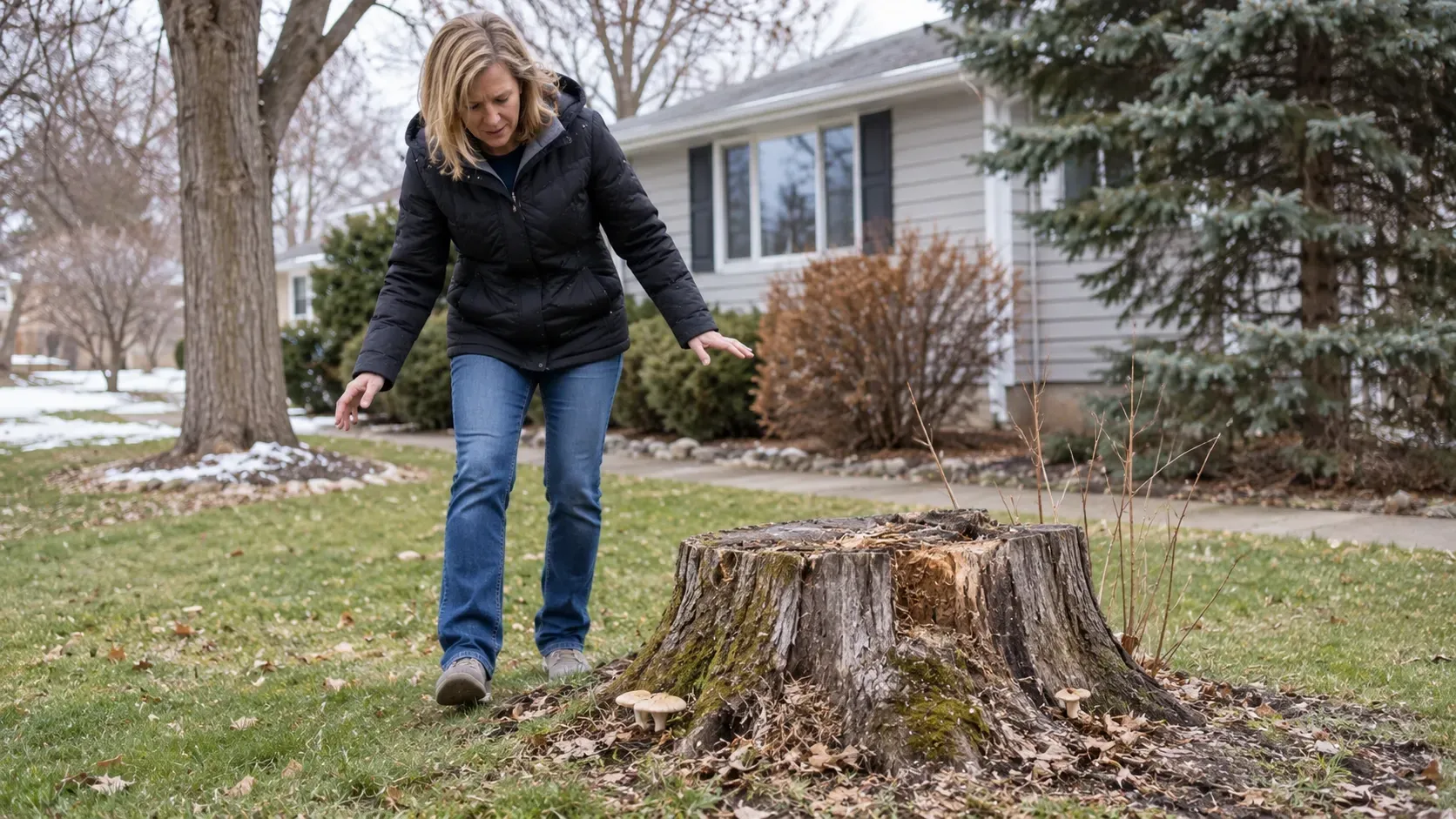
Table of Contents
- Introduction
- What Are the Main Reasons to Remove an Old Tree Stump?
- Old Tree Stump Hazards Property Owners Often Overlook
- Benefits of Stump Removal for Your Property
- Stump Removal Methods and What Each One Involves
- A Practical Framework for Deciding
- Hamilton and Bitterroot Valley Considerations
- Conclusion
- Planning Tree Stump Removal? Let's Talk It Through
- Frequently Asked Questions
Key Takeaways
- Old stumps create trip hazards, mowing obstacles, and conditions that can attract insects and fungi, and these problems rarely resolve on their own
- Natural decay is slow and unpredictable, often taking many years, so waiting is not a reliable plan for clearing a stump
- Grinding and full extraction are the two main removal methods, and the better option depends on stump size, nearby structures, and what you plan to do with the space
- In Hamilton and the Bitterroot Valley, snow cover, frozen ground, variable soil, and wildfire season all affect how and when stump work is planned
- A short site review before choosing a method helps avoid damage to irrigation lines, walkways, and nearby plants
Introduction
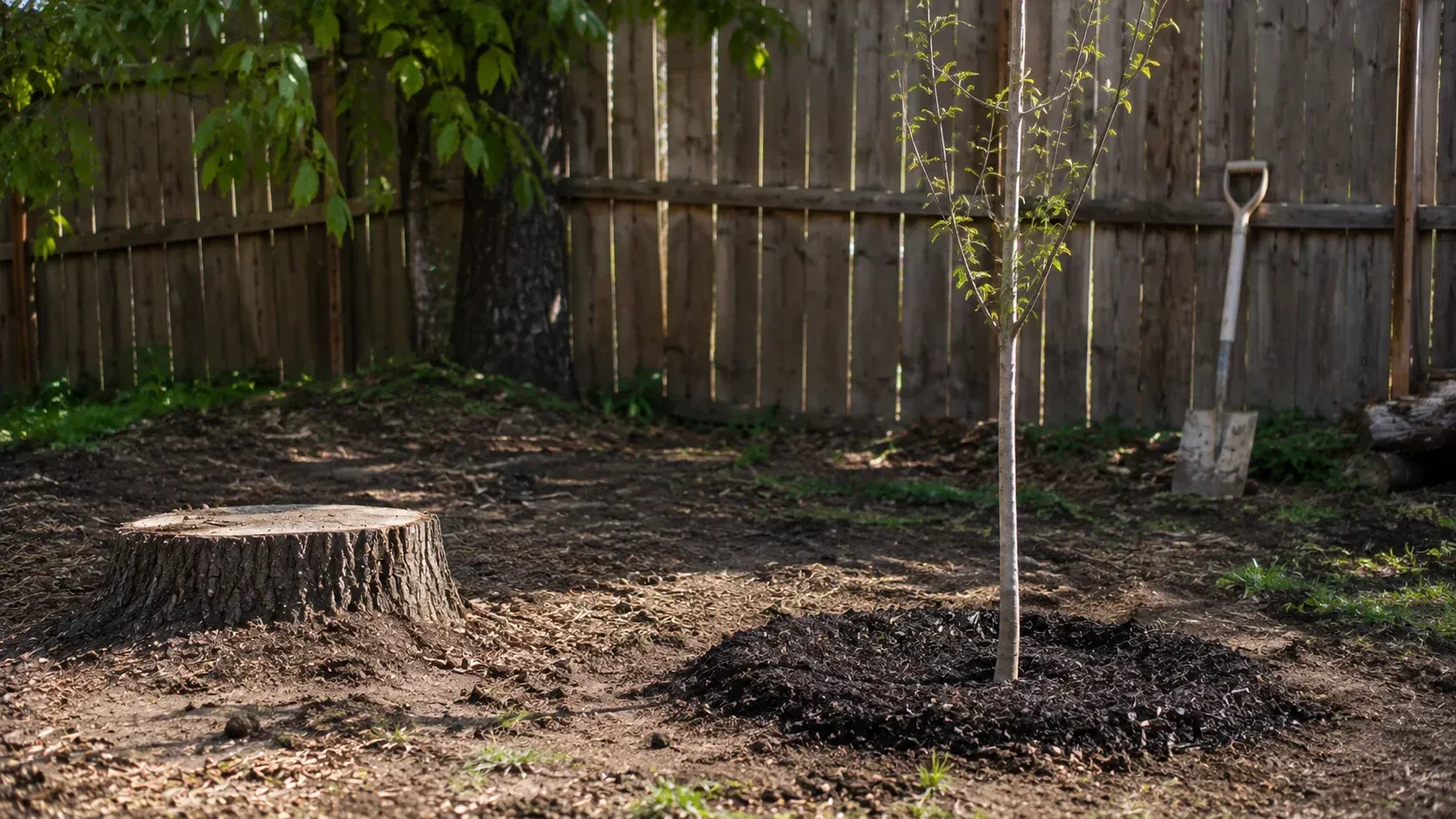
The main reasons to remove an old tree stump are safety, control of decay and pests, and getting your yard back for other uses. A stump left in place can cause trips and falls, attract wood-destroying insects, and keep pushing up shoots from the roots in some species, which is why stump grinding is one of the most common ways property owners deal with them.
For homeowners and business owners in Hamilton, the question usually comes up after a tree has been cut down or lost in a storm and the stump is still sitting in the lawn, driveway edge, or landscaped bed. It is easy to treat it as a minor leftover. But a stump affects how you mow, how you plow or shovel snow, how you walk across the area, and what you can build or plant there, and on commercial property it can raise safety and liability concerns.
This guide explains what old tree stump hazards look like in practice, what you gain by clearing a stump, how the main removal methods compare, and what to think about before work begins. The goal is to help you decide whether removal makes sense for your property and what to check first.
What Are the Main Reasons to Remove an Old Tree Stump?
Direct Answer:
The main reasons to remove an old tree stump are to reduce injury risk, limit pest and fungal activity, stop regrowth, and free up usable space. A stump is dead or dying wood that stays in place for years, so it keeps affecting the yard long after the tree is gone.
Why This Matters:
Many people assume a stump will fade away as the wood breaks down. In reality, decay depends on wood species, stump size, moisture, and soil conditions. A large stump can take many years to break down, and during that time it remains a physical obstacle and a possible home for insects and fungi.
The Practical Reality:
Not every stump needs to go right away. A small stump in a back corner that nobody walks near may be low priority. A stump beside a walkway, driveway, play area, or commercial entrance is a different situation. The reasons to remove it depend on where it sits and how the space is used.
Old Tree Stump Hazards Property Owners Often Overlook
Old tree stump hazards tend to build slowly, which is why they get ignored until something goes wrong.
Trip and Fall Risks
A stump cut close to the ground can be hard to see, especially in tall grass, under snow, or in low light. Visitors, children, and delivery workers are most likely to trip because they do not know the stump is there. On business property, an unmarked stump near a path or parking area is the kind of hazard that can lead to injury claims.
Equipment Damage and Mowing Problems
Mowers, string trimmers, and snow equipment do not handle stumps well. Hitting one can dent a mower deck, bend a blade, or throw debris. A stump hidden under snow can also catch a plow blade or snow blower. Many owners end up mowing awkward circles around the stump, which leaves uneven patches of grass.
Pests and Wood-Destroying Insects
Decaying wood can attract insects such as carpenter ants and other wood-destroying species. A stump does not always cause an infestation, and conditions vary from site to site, but moist, softening wood is the kind of material these insects look for. If a stump sits close to a house, fence, or deck, it is worth watching for signs of insect activity.
Fungal Growth and Decay
Mushrooms or conks growing on or around a stump are a sign that fungi are breaking down the wood. This is a normal part of decay, but it can also mean the root system is still decomposing underground. Fungal growth can make the area look unkempt and may stay active for years.
Sprouting and Root Regrowth
Some species send up shoots from the stump or roots after the main tree is cut. Cottonwood and aspen are common examples in the Bitterroot Valley, while conifers such as ponderosa pine and Douglas fir generally do not resprout. These sprouts can keep returning, and cutting them back repeatedly takes ongoing effort. Removing the stump can reduce this problem, though it may not stop every shoot from the surrounding roots.
Benefits of Stump Removal for Your Property
The benefits of stump removal are mostly practical. They affect how safe, usable, and manageable the space is.
Safer Walking and Play Areas
Clearing a stump removes a fixed obstacle from lawns, paths, and gathering spaces. This matters most where children play, pets run, or customers walk.
Easier Lawn, Landscape, and Snow Maintenance
Without a stump, mowing and edging become straightforward, and snow removal is less likely to hit a hidden obstacle. You can also replace the spot with turf, mulch, or planting beds without having to work around a solid object.
A Cleaner Appearance
A weathered stump can make an otherwise tidy yard look neglected. Removing it can improve how the property looks, though the effect depends on what takes its place. Bare soil or wood chips left unfinished can look rough too, so a plan for the spot helps.
Room for New Construction or Planting
If you want to install a patio, fence, shed, or new tree where the old one stood, the stump and its large roots are likely in the way. Clearing them first avoids having to dig around buried wood later, which can cause settling problems under hardscape.
Stump Removal Methods and What Each One Involves
Different methods suit different sites. Understanding the trade-offs makes it easier to ask good questions.
Stump Grinding
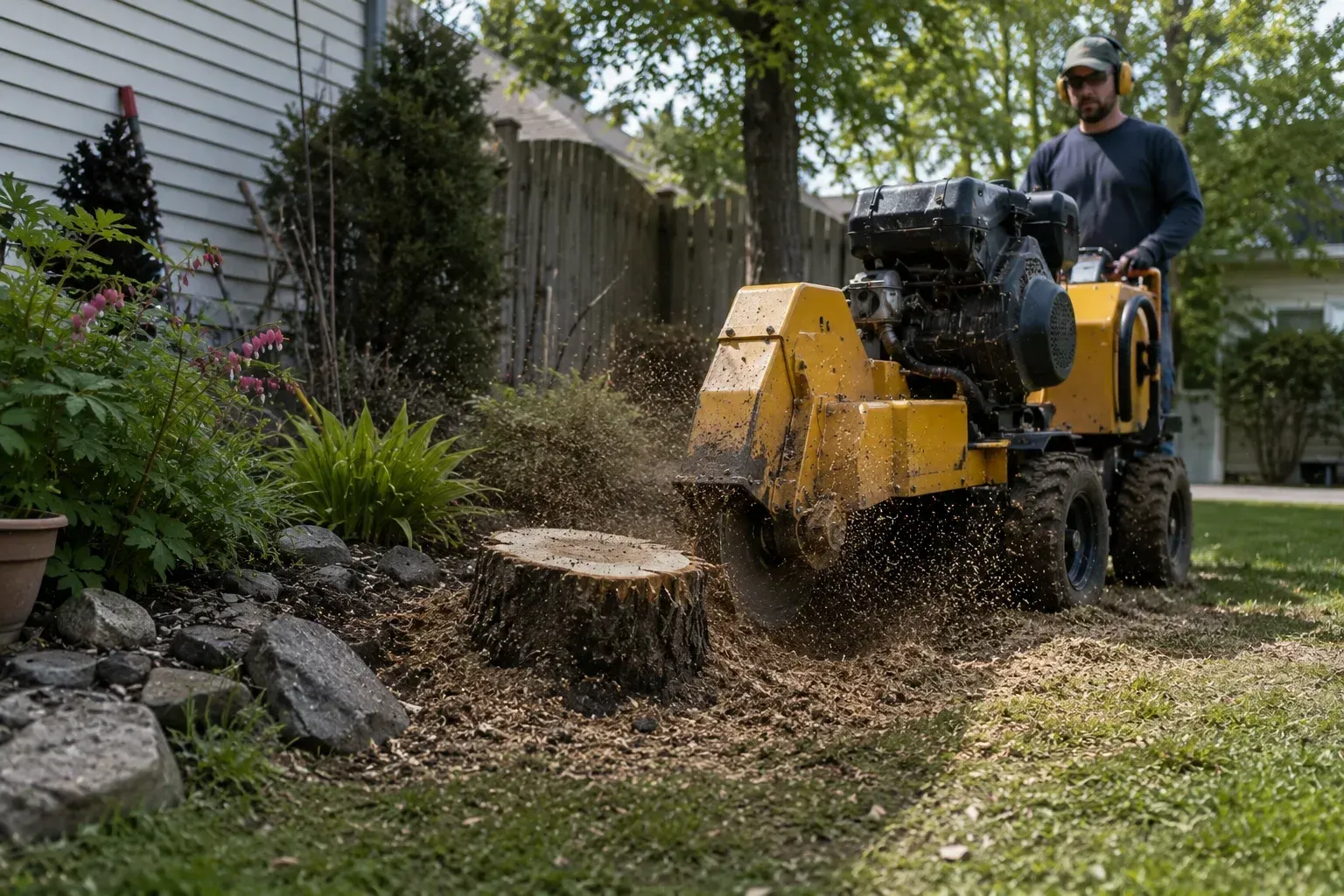
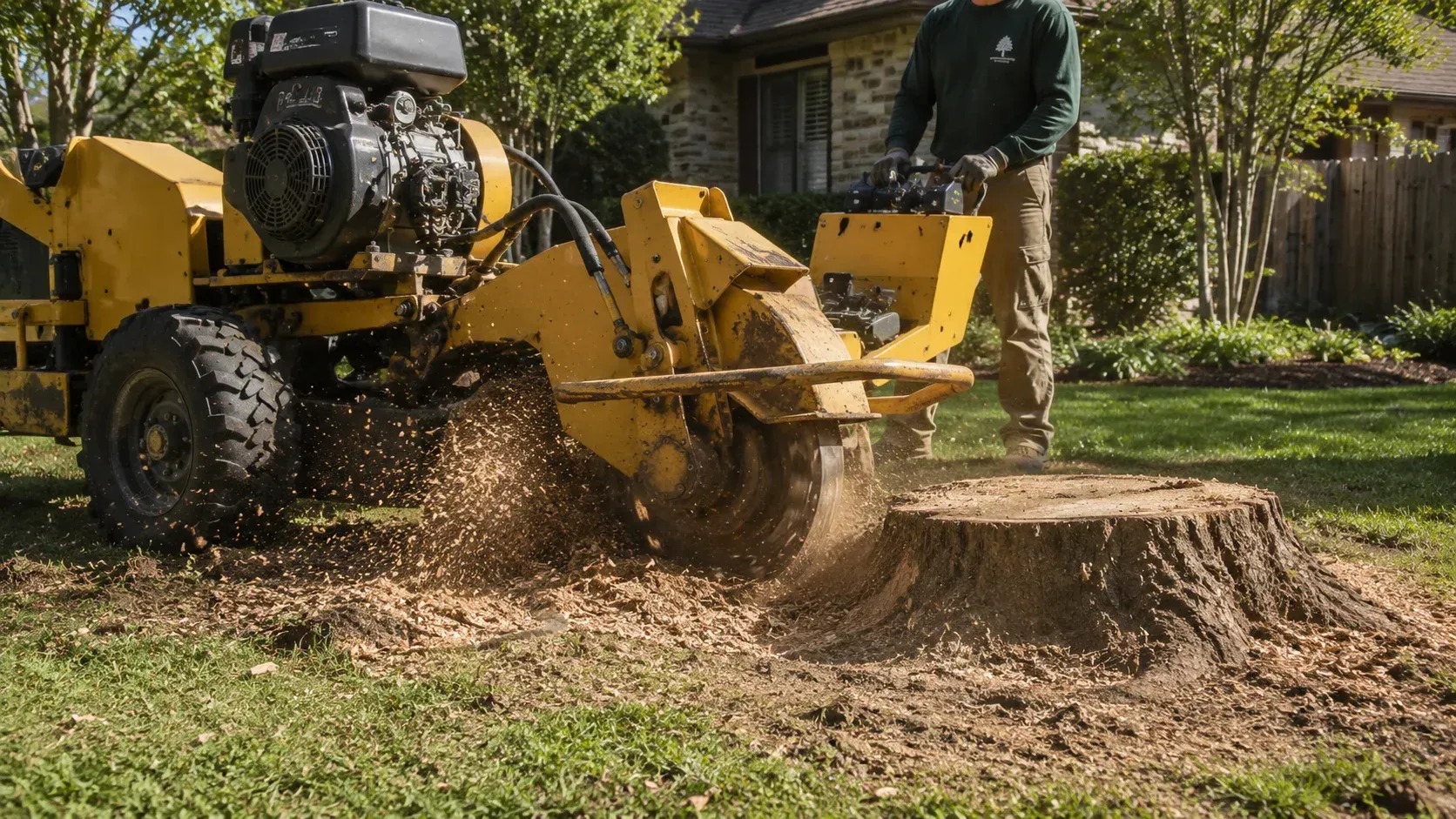
Stump grinding uses a machine with a rotating cutting wheel to chip the stump away, usually several inches below ground level, often around 6 to 12 inches depending on the goal. It is generally faster than digging and causes less disturbance to the surrounding yard. The roots remain underground and decay over time, and the wood chips left behind can be reused as mulch or removed.
Full Stump Extraction
Extraction pulls or digs out the stump and a larger share of the root ball. It can be useful when you need the ground fully cleared for construction or when regrowth is a concern. It usually requires heavier equipment, leaves a larger hole to backfill, and can disturb more of the surrounding soil. Because site conditions vary, a local tree service can compare methods for your property and explain what each would involve.
Natural Decay and Chemical Methods
Some people let a stump rot or use a chemical stump remover to speed decay. These products generally require drilling holes in the stump, applying the product, and waiting weeks to months or longer for the wood to soften enough to break apart. The process is slow, and chemicals need careful handling and label directions, especially near pets, children, and desirable plants. Burning a stump is restricted in many areas, and Montana's dry seasons often bring fire restrictions, so check with local fire authorities before considering it.
A Practical Framework for Deciding
Use these steps to decide whether to remove a stump and how.
- Identify the goal. Are you trying to improve safety, prepare for construction, stop sprouting, or simply tidy the yard? The goal shapes how thorough the removal needs to be.
- Look at what is nearby. Note fences, sprinkler heads, walkways, foundations, and any visible utility markers. These affect equipment access and risk.
- Check for buried lines. Call 811 before any digging or deep grinding, and mention private lines such as irrigation, which are often not marked by the utility service.
- Match the method to the site. Small or isolated stumps may suit grinding. Sites that need full clearing for building may call for extraction.
- Plan the aftermath. Decide whether the spot will become lawn, a planting bed, or a hardscape area, and how wood chips and loose soil will be handled.
- Get an assessment for larger or risky stumps. Large stumps, stumps near structures, or stumps with unknown utilities nearby are better evaluated before work begins.
Hamilton and Bitterroot Valley Considerations
Local conditions do not change the basic reasons to remove a stump, but they affect how the work is planned.
Snow Cover and Frozen Ground
Winters in the Bitterroot Valley can hide stumps under snow and freeze the ground, which makes digging harder and can limit access for equipment. Many property owners find it easier to schedule stump work when the ground is thawed and the stump is clearly visible, though conditions vary from year to year.
Variable and Rocky Soil
Soil in the valley can change quickly from one lot to the next, and some areas contain gravel or rocks that affect grinding and digging. This is a general pattern, and it is worth having the stump and surrounding ground looked at before choosing a method.
Wildfire Season and Dead Wood
Montana's dry summers bring wildfire concerns, and dead wood and debris near buildings can add fuel. Clearing old stumps and dead material near structures is one way property owners approach reducing that risk, though it is only one part of broader fire preparedness.
Call 811 and Check Local Rules
Calling 811 before digging is standard practice and arranges for public utility lines to be marked. Private lines, such as irrigation, usually are not marked, so point them out to the crew. Cities, counties, and homeowner associations may also have rules about yard waste and open burning, so confirm what applies to your address before starting.
Conclusion
Old tree stumps are more than a cosmetic issue. They can cause injuries, damage equipment, support insects and fungi, and block plans for the yard. Natural decay is slow and unpredictable, so waiting rarely solves the problem within a useful timeframe.
Grinding and extraction are the two main approaches, and each has trade-offs in disturbance, thoroughness, and effort. In Hamilton and the Bitterroot Valley, snow, frozen ground, variable soil, wildfire season, buried utilities, and local rules all shape the plan. Checking what is underground, deciding what the space will become, and matching the method to the site leads to better decisions than choosing based on price or speed alone.
Planning Tree Stump Removal? Let's Talk It Through
Every stump sits in a different setting, and the right approach depends on its size, location, and what you plan to do with the space afterward. If you are weighing your options and want to talk through a specific situation in Hamilton, you can
contact us with questions about stump removal methods and what to consider before starting. There is no pressure, and the goal is simply to help you make an informed decision.
Frequently Asked Questions
1. How long does it take for an old tree stump to rot on its own?
It varies by species, size, and moisture, but decay often takes many years and sometimes decades. Dry conditions can slow the process, so a stump may remain a hazard much longer than expected.
2. Is it better to grind a stump or remove it completely?
Grinding is usually faster and disturbs less of the yard. Full extraction removes more of the root mass but needs heavier digging. The better choice depends on what you plan to build or plant there.
3. Do I need to call 811 before stump removal?
If the work involves digging or deep grinding, calling 811 first is standard practice. The free service marks public utilities. Irrigation and other private lines are often not marked, so point them out to the crew.
4. Can a stump be removed in winter?
Sometimes, but snow cover and frozen ground can make access and digging harder. Many property owners prefer to wait for thawed ground so the stump and surrounding area are easier to see and work around.
5. Can I plant a new tree where a stump was removed?
Yes, but loose soil and wood chips may settle, so many people wait a few weeks and amend the area first. If the original tree was diseased, consider a different species or a slightly different location.