Does Stump Grinding Damage Nearby Landscaping or Irrigation Lines?
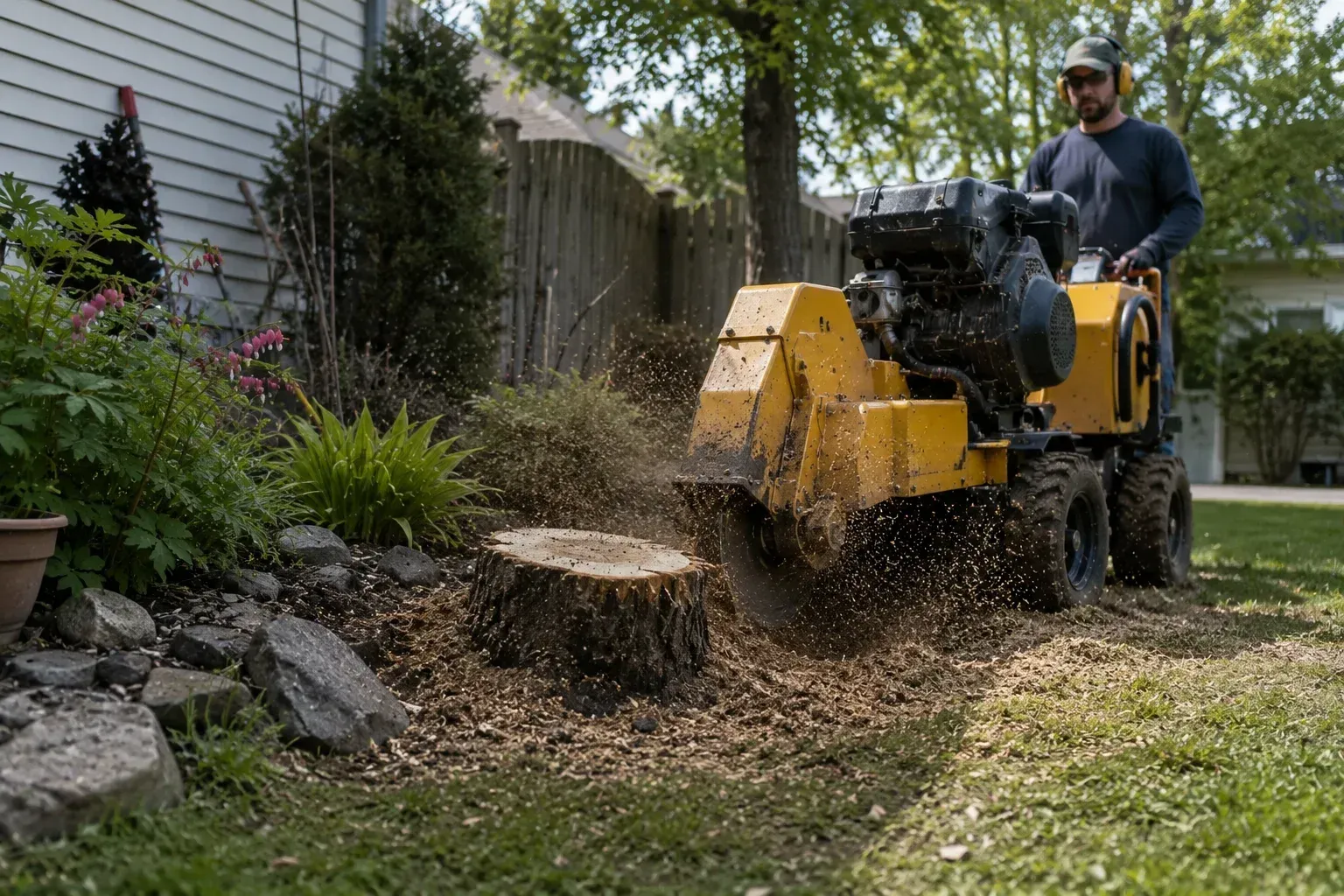
Table of Contents
- Introduction
- What Happens to Nearby Plants and Hardscape During Stump Grinding
- Irrigation Lines and Stump Grinding: The Real Risk in Hamilton, MT
- How Professional Stump Grinding Operators Protect Your Property
- A Practical Framework for Protecting Your Landscape Before Stump Grinding
- Conclusion: Protecting Your Property During Stump Grinding
- Plan Your Stump Grinding Project in Hamilton, MT
- Frequently Asked Questions
Key Takeaways
- Stump grinding itself is unlikely to damage landscaping beyond the immediate grinding area, but debris scatter, equipment movement, and cleanup can affect nearby plants and hardscape if not managed carefully.
- Irrigation lines are the primary concern because they are invisible underground, and both the grinding wheel and equipment repositioning can damage them if lines are not located first.
- Professional operators reduce damage risk substantially through site assessment, debris containment, and careful equipment positioning.
- Most damage during stump grinding traces back to cleanup and equipment movement, not the grinding process itself.
- Locating buried irrigation lines before work begins, and communicating clearly with your contractor about what is nearby, prevents the vast majority of potential issues.
Introduction
Stump grinding does not inherently damage nearby landscaping or irrigation systems, but the risk exists if equipment is positioned carelessly, debris is not managed properly, or buried irrigation lines are not identified beforehand.
For Hamilton homeowners weighing stump grinding, the risk level depends mainly on what is actually near the stump and how carefully the operator manages the site. A stump sitting in the middle of an open yard presents minimal risk. A stump near expensive landscaping, an active irrigation system, or hardscaping calls for more communication and planning before work starts.
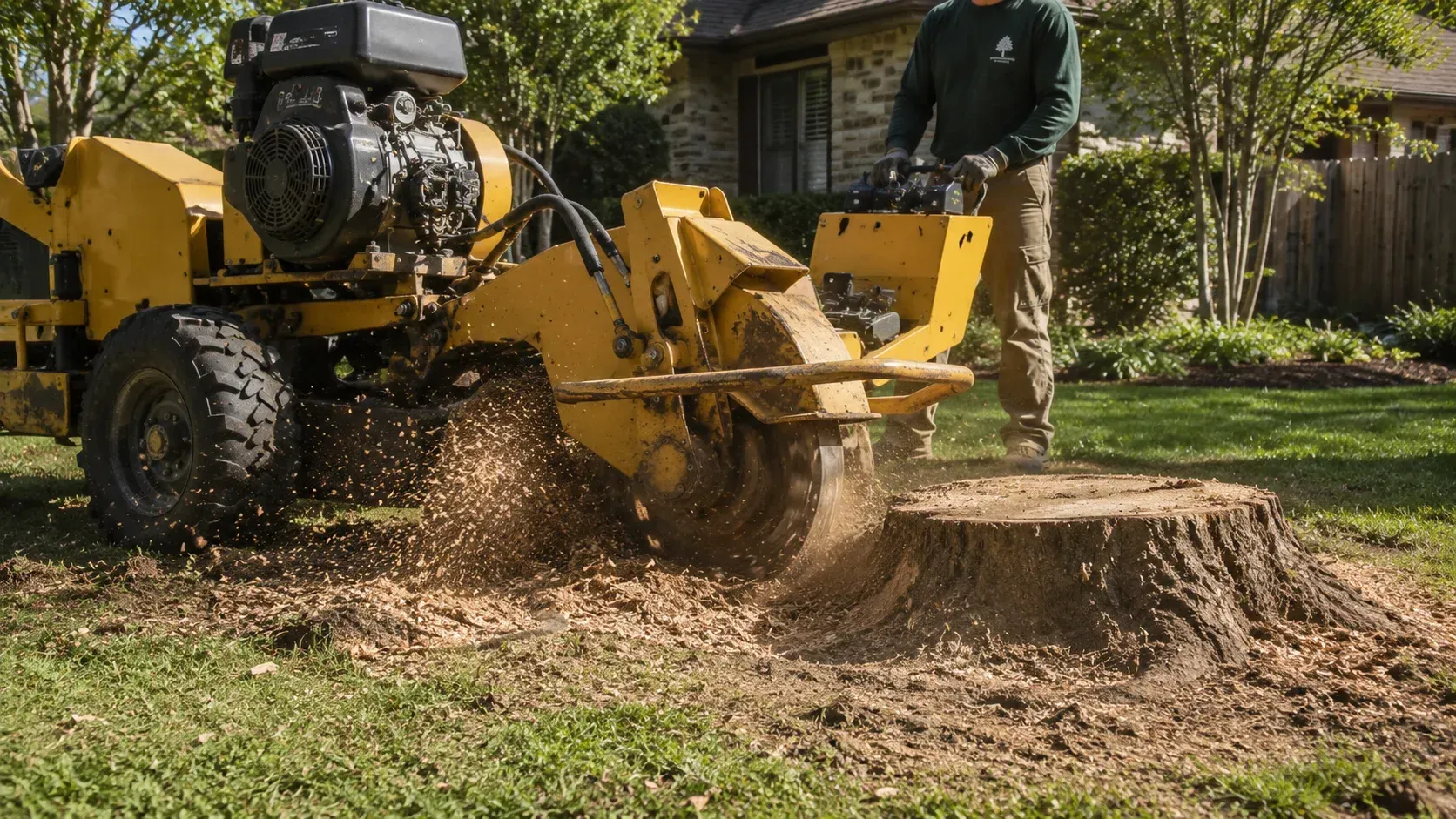
The grinding wheel itself operates in a contained area directly on the stump. It is not swept across surrounding plants. The real exposure comes from everything around the grinding: equipment repositioning, debris scatter, and how the site is cleaned up afterward. Professional operators account for these factors as a matter of routine. Less experienced operators sometimes do not.
What Happens to Nearby Plants and Hardscape During Stump Grinding
Vibration on Grass and Soil
Grinding creates vibration that travels a short distance through the soil. Grass and established plants within a few feet of the stump tolerate this vibration without harm. The more common issue is equipment movement. If a grinder is driven over grass repeatedly to reposition, turf can be compacted or crushed, which is why equipment placement matters more than the grinding itself.
Wood Chip Scatter
Grinding produces wood chips that can scatter depending on grinding direction and wind. Chips landing on mulched beds or grass are not harmful. They function as mulch and improve soil as they break down. Chips landing on driveways, patios, or decorative hardscaping are a cosmetic issue rather than a damage issue, and they sweep or blow away easily.
Established Plants and Shrubs
Plants and shrubs within a few feet of the stump are generally safe from the grinding wheel, since the operator keeps the grinding head focused on the stump rather than swinging it toward surrounding vegetation. The exception is when equipment needs frequent repositioning, or when debris is pushed across a planting bed during cleanup, which can disturb or bury nearby plants.
Driveways, Patios, and Paved Surfaces
Hard surfaces near a stump are not damaged by the grinding process itself. The concern is debris and equipment movement. Wood chips sweep or blow off pavement without residue, and tire marks or surface damage are preventable by routing equipment away from paved areas whenever possible.
Irrigation Lines and Stump Grinding: The Real Risk in Hamilton, MT
Irrigation lines represent the most significant risk in stump grinding, not landscape plants. Buried lines cannot be seen, and both the grinding wheel and equipment movement can damage them if their location is unknown.
Where Irrigation Lines Typically Run
Most irrigation systems follow predictable patterns: along fence lines, under or near planting beds, across lawns, and radiating out from a main supply line. If a stump sits anywhere near beds or turf areas served by an active irrigation system, buried lines are likely nearby.
Why the Depth Overlap Matters
The grinding wheel removes wood down to roughly 8 to 12 inches below the surface. Irrigation lines typically run 4 to 8 inches deep, depending on local installation standards and freeze protection requirements. That depth overlap means a line running through or near the stump's root zone can be contacted by the grinding wheel if its position is unknown. Equipment repositioning adds a second risk, since tires can rupture buried PVC or drip line if the operator crosses an unmarked area.
How to Prevent Irrigation Damage
The solution is straightforward. Before grinding begins, call a utility locating service to identify buried lines, a free or low-cost service in Montana. Locators mark irrigation lines with flags or paint, and the operator plans equipment placement and grinding direction around those markers. If you are unsure whether your property has irrigation, or unsure exactly where lines run, ask your contractor to arrange locating before work starts. Professional contractors expect this step and work with marked lines routinely.
How Professional Stump Grinding Operators Protect Your Property
Site Assessment Before Work Begins
Professional operators typically spend 10 to 15 minutes evaluating the property before touching equipment. They identify what is near the stump, whether that is plants, hardscape, utilities, or structures, and talk with the homeowner about what needs protecting. This assessment is what substantially lowers the risk of any incident.
Debris Management Strategy
Rather than letting chips scatter randomly, professionals control grinding direction and equipment positioning so debris moves away from sensitive areas such as vegetable gardens or decorative plantings. Tarps or barriers are sometimes used to contain spread in tighter spaces.
Equipment Positioning and Movement
Where the grinder sets up determines what stays safe. Operators consider ground conditions and plan positioning to minimize repositioning, avoiding planted areas and hardscape whenever the site allows it. When repositioning is unavoidable, an experienced operator chooses the path that causes the least disturbance.
Communication Before the Work Starts
Good contractors ask what matters to you before they begin: whether mulch on the driveway is a concern, whether irrigation needs protecting, whether specific plants should be avoided. That conversation is what allows an operator to make deliberate choices about equipment placement and grinding direction instead of guessing.
A Practical Framework for Protecting Your Landscape Before Stump Grinding
Step 1: Identify what is near your stump. Walk the area within 10 to 15 feet of the stump and note planting beds, hardscape, structures, and any visible irrigation components. Mark anything you want the operator to pay special attention to.
Step 2: Locate buried utilities before scheduling. Call for utility locating a few days ahead of the job. Locators mark water, irrigation, electrical, and gas lines, giving you and your contractor clear information to plan around. This single step removes most of the risk to irrigation.
Step 3: Communicate your expectations with the contractor. Mention valuable plantings near the stump, whether debris on the driveway is a concern, and whether you or the contractor will arrange irrigation locating. Clear communication upfront prevents surprises later.
Step 4: Mark sensitive areas. Use stakes, flags, or rope around anything that needs protecting. Even experienced operators benefit from a clear visual boundary.
Step 5: Decide on debris handling. Choose whether chips should be swept from hardscape, left in planting beds, or fully cleaned up. This affects both the outcome and how the operator manages the site.
Step 6: Walk the property after completion. Before the job is finished, walk the site with the operator to confirm irrigation was not disturbed, hardscape was cleaned as agreed, and the surrounding area meets expectations.
Conclusion: Protecting Your Property During Stump Grinding
Stump grinding does not inherently put your landscaping or irrigation system at risk, but the outcome depends on how the work is planned and managed. Professional operators lower that risk substantially through site assessment, communication, equipment positioning, and careful debris handling.
The most important protections are simple: identify what sits near your stump, locate buried irrigation lines before grinding starts, tell your contractor what matters to you, and agree on how debris will be handled. These steps address the vast majority of potential issues before they happen. Irrigation lines are the main concern, and locating them in advance removes that concern almost entirely. For plants and hardscape, operator experience and clear communication do the rest.
Plan Your Stump Grinding Project in Hamilton, MT
Protecting your property during stump grinding is not complicated, but it does take some planning. The difference between a smooth project and one with unexpected issues usually comes down to communication before the equipment ever arrives.
If you are considering stump grinding in Hamilton or elsewhere in the Bitterroot Valley and want to know what precautions make sense for your yard, our full tree services in Hamilton, MT covers how stump grinding fits alongside tree removal, tree trimming, and brush removal for a complete property cleanup.
Reach out to Legacy Tree Services with details about where your stump sits and what is nearby. There is no one-size-fits-all answer, and no pressure, just a conversation about what your property actually needs.
Frequently Asked Questions
If I have a sprinkler system near my stump, can the grinder avoid hitting it?
Yes, if the system is located and marked before grinding begins. Utility locating marks irrigation lines above ground with flags, and the operator plans equipment placement and grinding direction to stay clear of those marks.
Will stump grinding chips harm nearby plants or the soil where they land?
No. Wood chips are essentially mulch and are safe for plants. Chips in garden beds improve soil as they break down, and chips on grass decompose naturally. The only real issue is cosmetic if chips land on a driveway or patio.
What happens if the operator accidentally damages an irrigation line during grinding?
Removing them together is usually more time- and cost-efficient. Setup happens once, and the operator's pace improves as the visit continues, so three stumps in one visit often take noticeably less total time than three separate appointments.
Can nearby shrubs or established plants be damaged just from grinding vibration?
Established plants tolerate grinding vibration without harm. Damage to plants typically comes from equipment physically contacting them or debris covering them, not from vibration alone.
Should I remove plants near the stump before grinding to be safe?
No, removal is usually unnecessary. Identifying the plants to your contractor and asking them to protect them is enough. Marking sensitive plants and directing debris away from them protects your landscaping without the extra cost of removal and replanting.