What's the Difference Between Tree Removal and Tree Trimming?
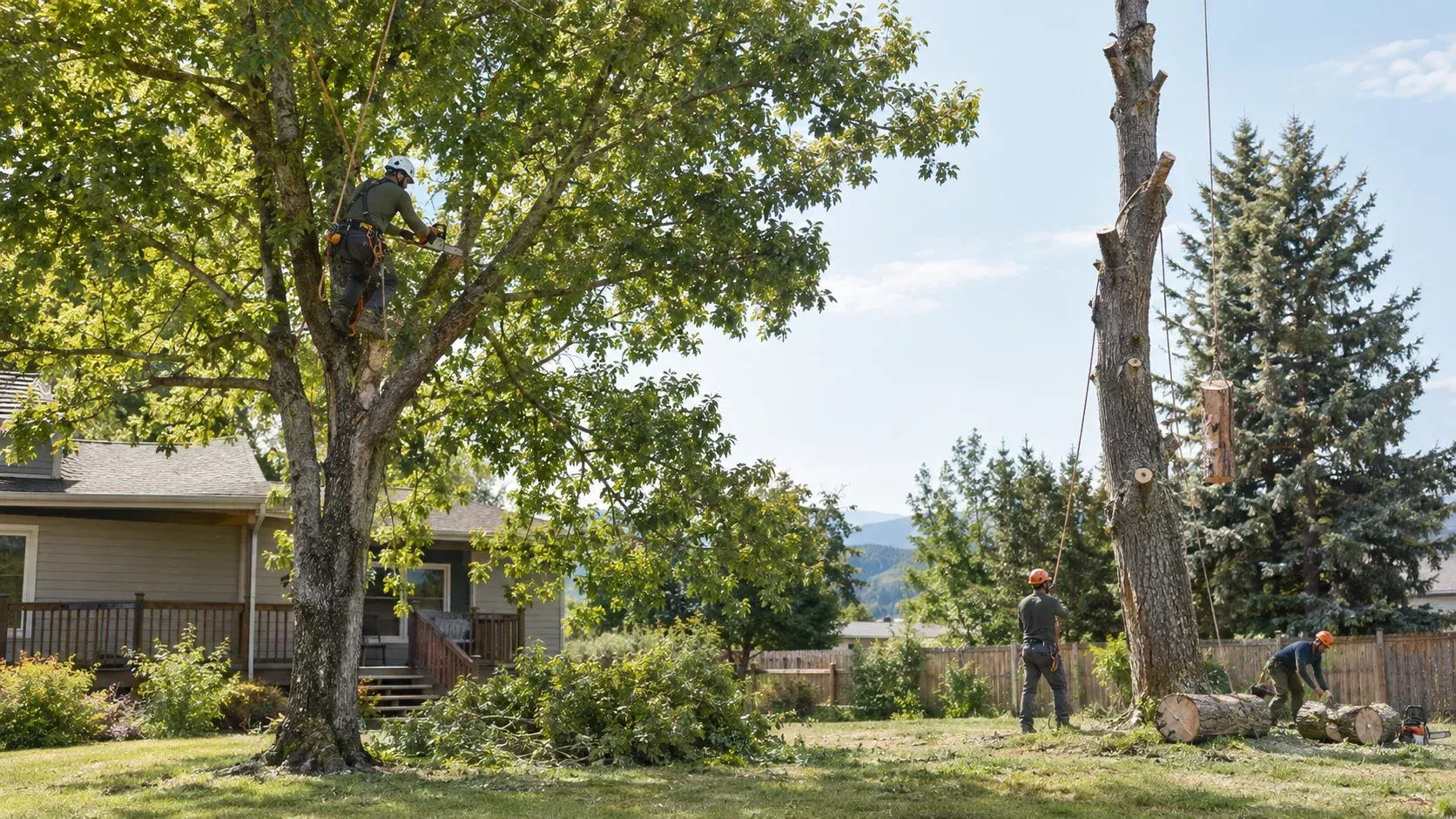
Table of Contents
- Introduction
- Tree Removal and Tree Trimming - The Core Difference
- What Tree Trimming Actually Involves
- What Tree Removal Actually Involves
- When Trimming Is the Right Choice
- When Removal Becomes Necessary
- A Practical Decision Framework
- Common Misconceptions About Removal and Trimming
- Real Scenarios - Trimming or Removal?
- What Typical Online Advice Gets Wrong
- Cost and Time Differences
- Conclusion
- Not Sure Which You Need? Let's Talk
- Frequently Asked Questions
Key Takeaways
- Tree trimming removes specific branches to maintain health, shape, and safety while keeping the tree alive, whereas tree removal eliminates the entire tree including the stump area
- Trimming is typically needed every 2-3 years for maintenance, while removal is a one-time decision usually driven by disease, structural failure, or hazard concerns
- Trees with isolated dead branches, overgrowth, or minor structural issues usually need trimming, while trees with extensive trunk damage, severe lean, or widespread disease usually need removal
- The cost difference is substantial because removal involves more labor, equipment, and disposal, while trimming is comparatively quicker and more affordable per visit
- Getting a professional assessment helps clarify which service your tree actually needs, since visual symptoms alone don't always indicate the correct solution
Introduction
Tree trimming involves selectively cutting specific branches to maintain a tree's health, shape, and safety while keeping the tree alive and growing, while tree removal involves cutting down the entire tree and typically includes stump grinding afterward. The fundamental difference comes down to whether the tree remains standing or is eliminated entirely from your property.
For Hamilton homeowners and property owners trying to figure out which service their tree needs, understanding this distinction matters because the wrong choice wastes money or leaves a hazard unaddressed. Some situations clearly call for trimming. Others clearly require removal. Many fall somewhere in between, which is where confusion often happens.
This guide walks through what each service actually involves, when each one makes sense, and how to recognize which situation applies to your trees. Whether you're dealing with overgrown branches or wondering if a declining tree needs to come down, understanding these tree services helps you make an informed decision.
Tree Removal and Tree Trimming - The Core Difference
Direct Answer:
Tree trimming cuts away specific parts of a tree while the tree remains alive and standing. Tree removal eliminates the entire tree, cutting it down completely and usually grinding the remaining stump.
Why This Matters:
These are fundamentally different services with different goals. Trimming is maintenance - it's something you do periodically to keep a healthy tree in good condition. Removal is elimination - it's something you do once when a tree can no longer stay on your property safely or healthily.
The Practical Reality:
Many homeowners assume trimming and removal are just "more" or "less" of the same service. They're not. A tree that needs trimming is a tree you want to keep. A tree that needs removal is a tree that's coming down regardless of how carefully the work is done. Understanding which category your tree falls into determines everything about the approach, cost, and outcome.
What Tree Trimming Actually Involves
Tree trimming is a maintenance service focused on specific branches rather than the whole tree.
The Trimming Process
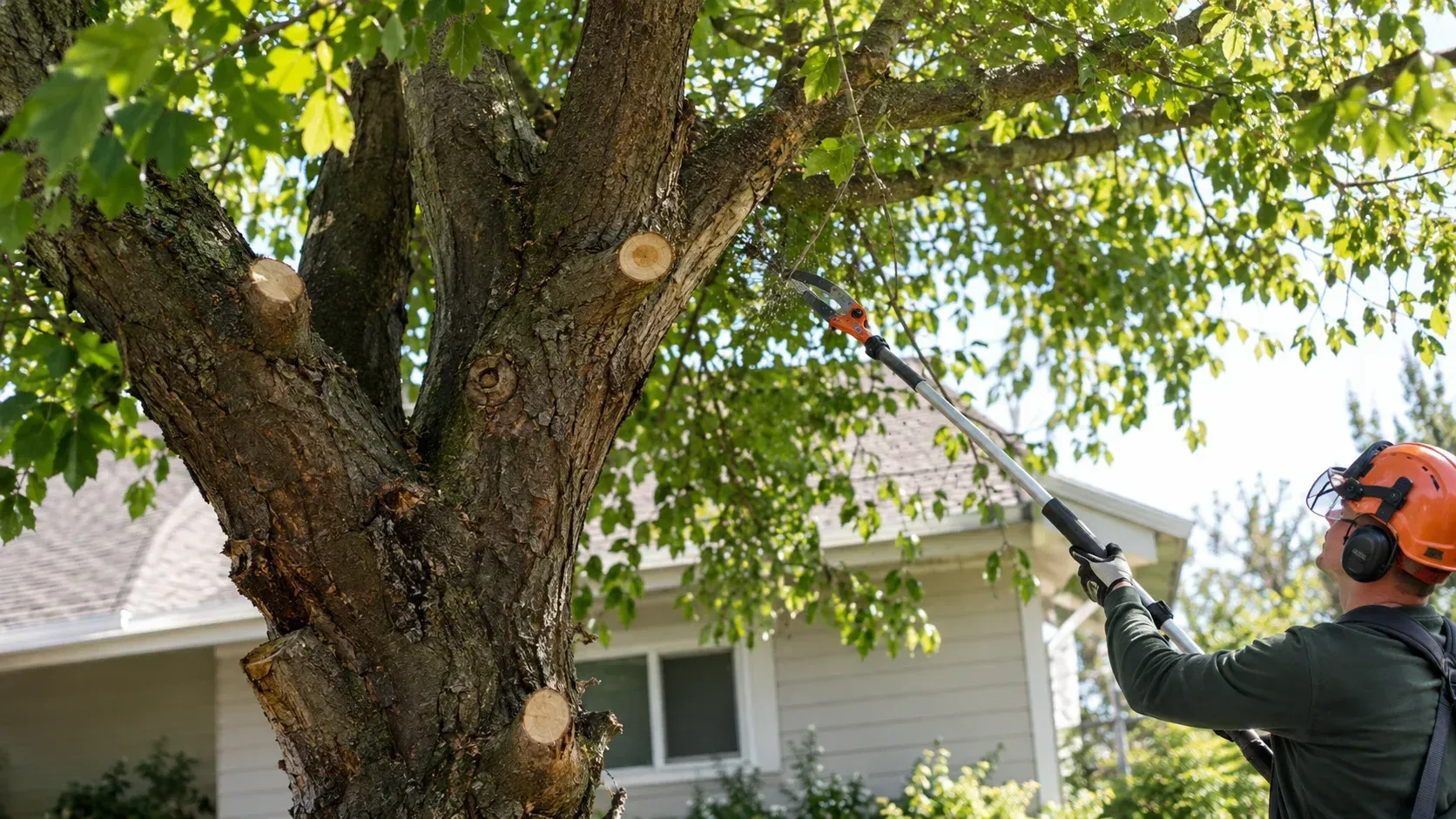
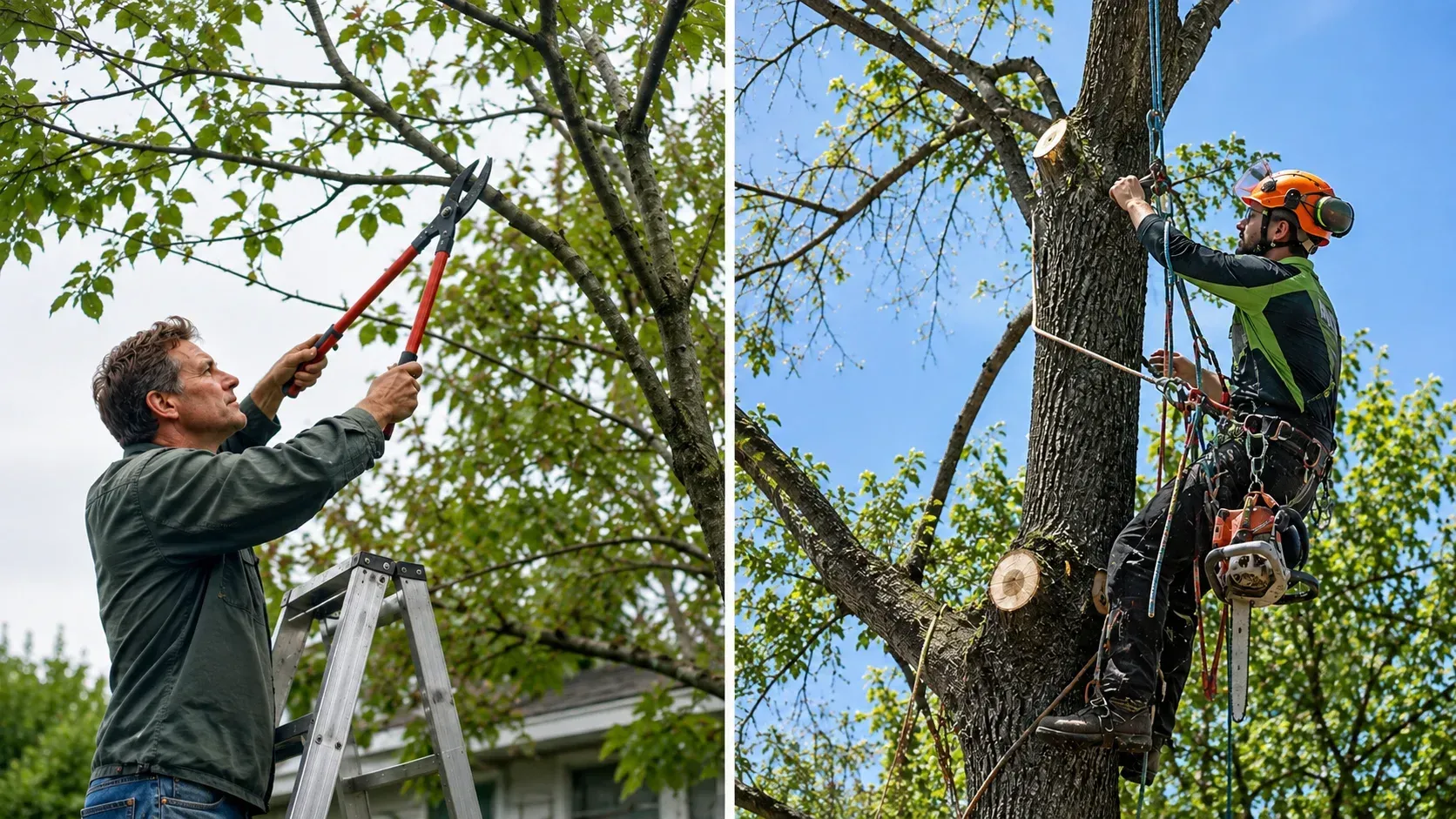
A professional trimming job starts with assessing the tree's structure, identifying dead, damaged, or problematic branches, and making targeted cuts at proper locations. The goal is improving the tree's health, appearance, and safety while leaving the main structure intact. Cuts are made at branch collars to promote proper healing.
Types of Trimming Work
Different trimming approaches serve different purposes. Crown thinning removes selected branches to improve light penetration and air circulation. Crown raising removes lower branches to provide clearance over structures, driveways, or walkways. Deadwooding removes dead or dying branches before they become hazards. Each type addresses a specific goal without affecting the tree's overall survival.
What Trimming Accomplishes
Regular tree trimming prevents branches from becoming safety hazards, improves the tree's structural integrity by removing weak or crossing branches, enhances appearance and encourages healthy new growth, and can extend a tree's lifespan significantly when done consistently over years.
What Tree Removal Actually Involves
Tree removal is a more involved process because the entire tree comes down.
The Removal Process
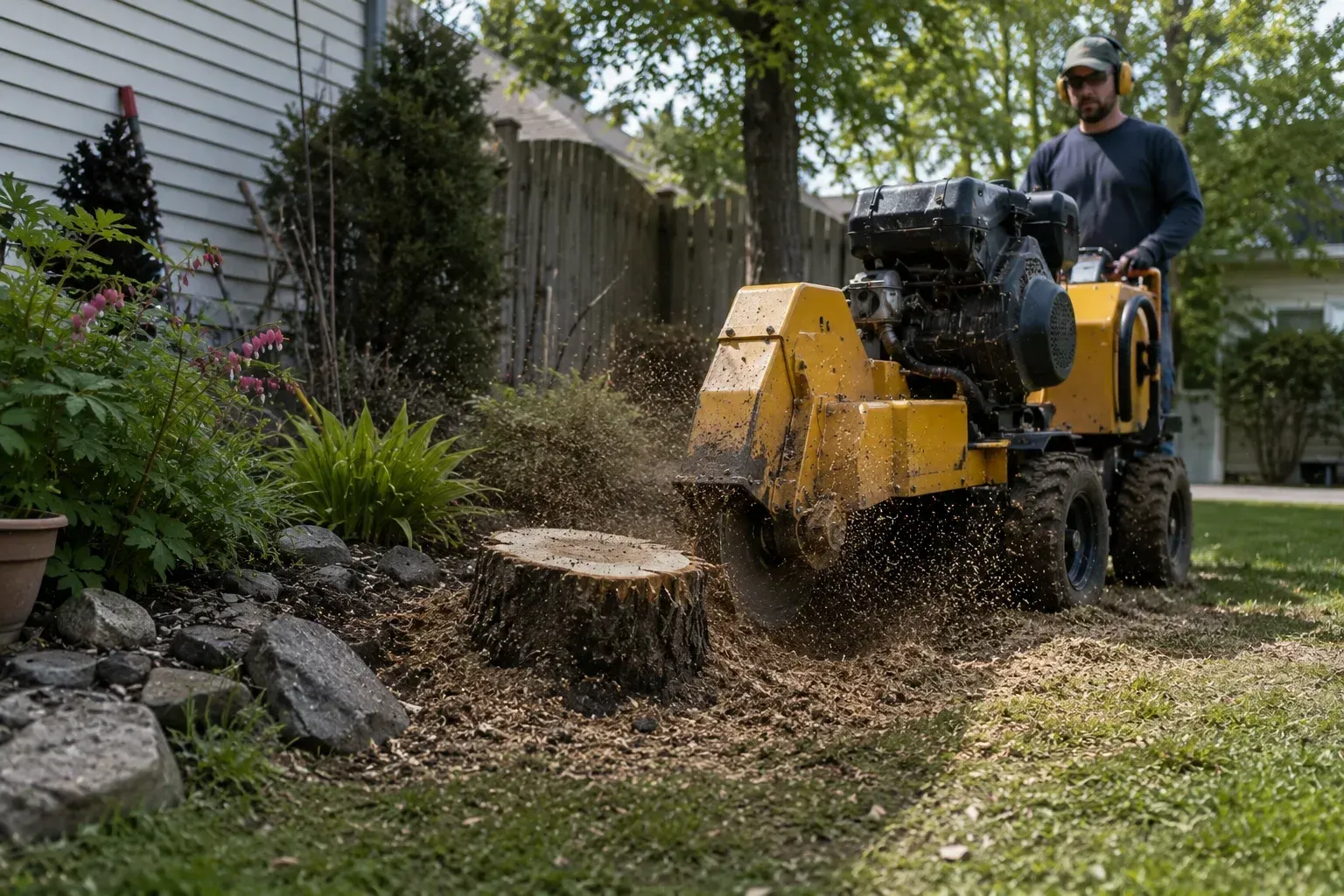
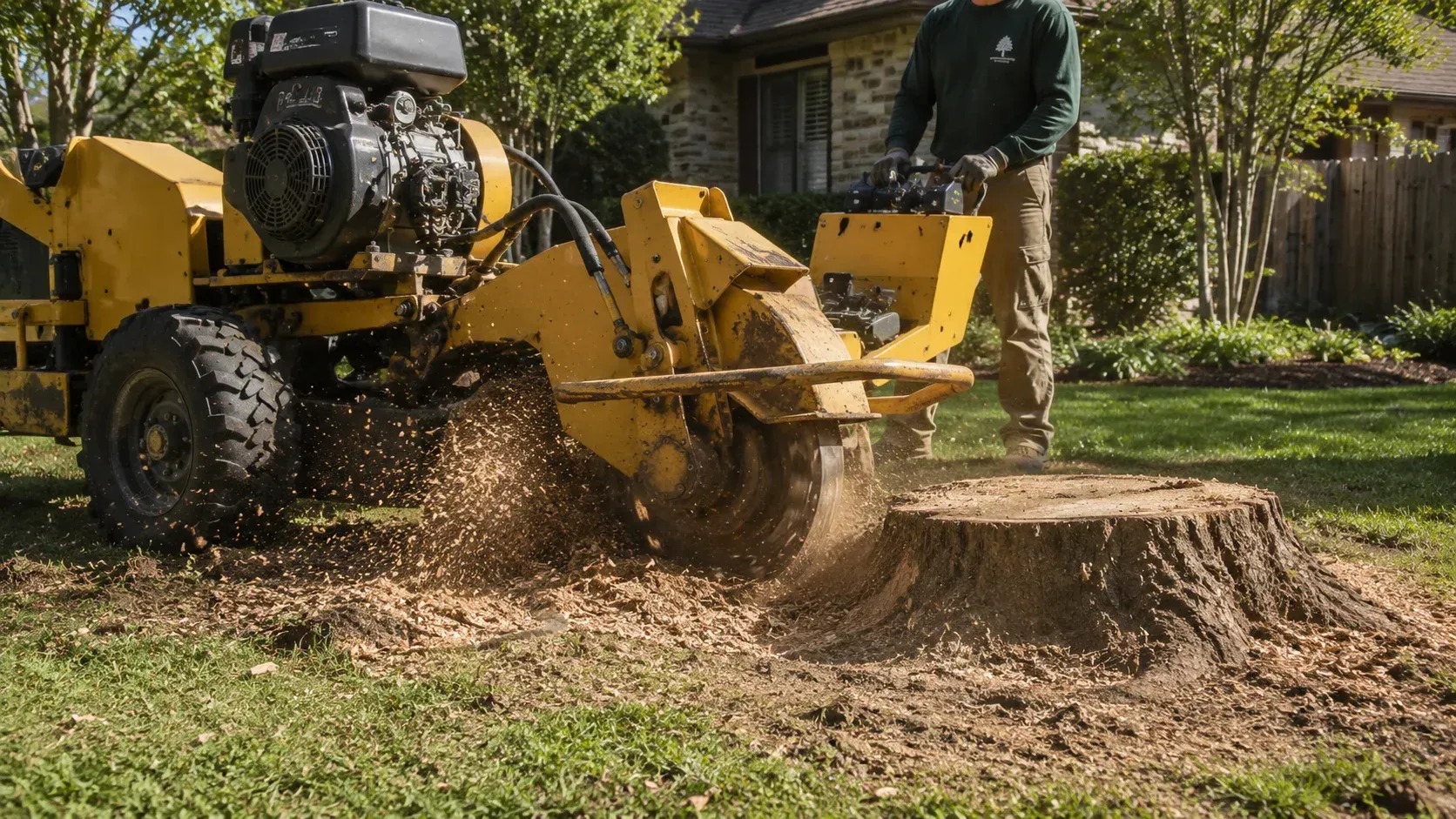
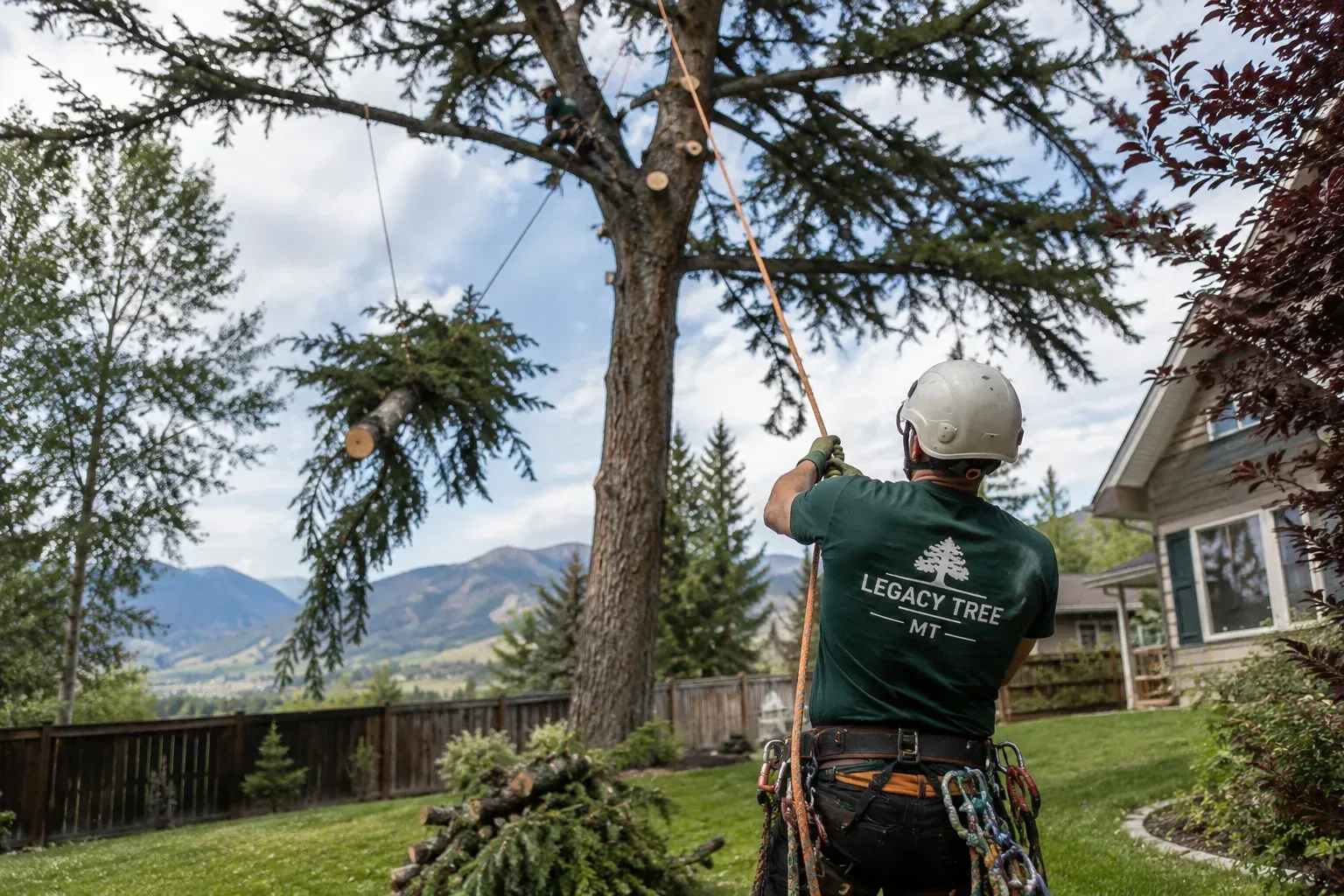
Removal starts with assessing the tree's lean, surrounding obstacles, and the safest direction for the tree to fall or be sectioned. For trees with limited space, sectional removal - cutting the tree down in pieces from the top down - is often necessary. Once the trunk is down, the remaining stump typically needs grinding to complete the job.
Factors That Affect Removal Complexity
Tree size, proximity to structures, lean direction, and surrounding obstacles all affect how removal is approached. A tree in an open field with no obstacles is straightforward. A tree leaning toward a house with power lines nearby requires careful planning, rigging, and possibly crane assistance.
What Happens After the Tree Comes Down
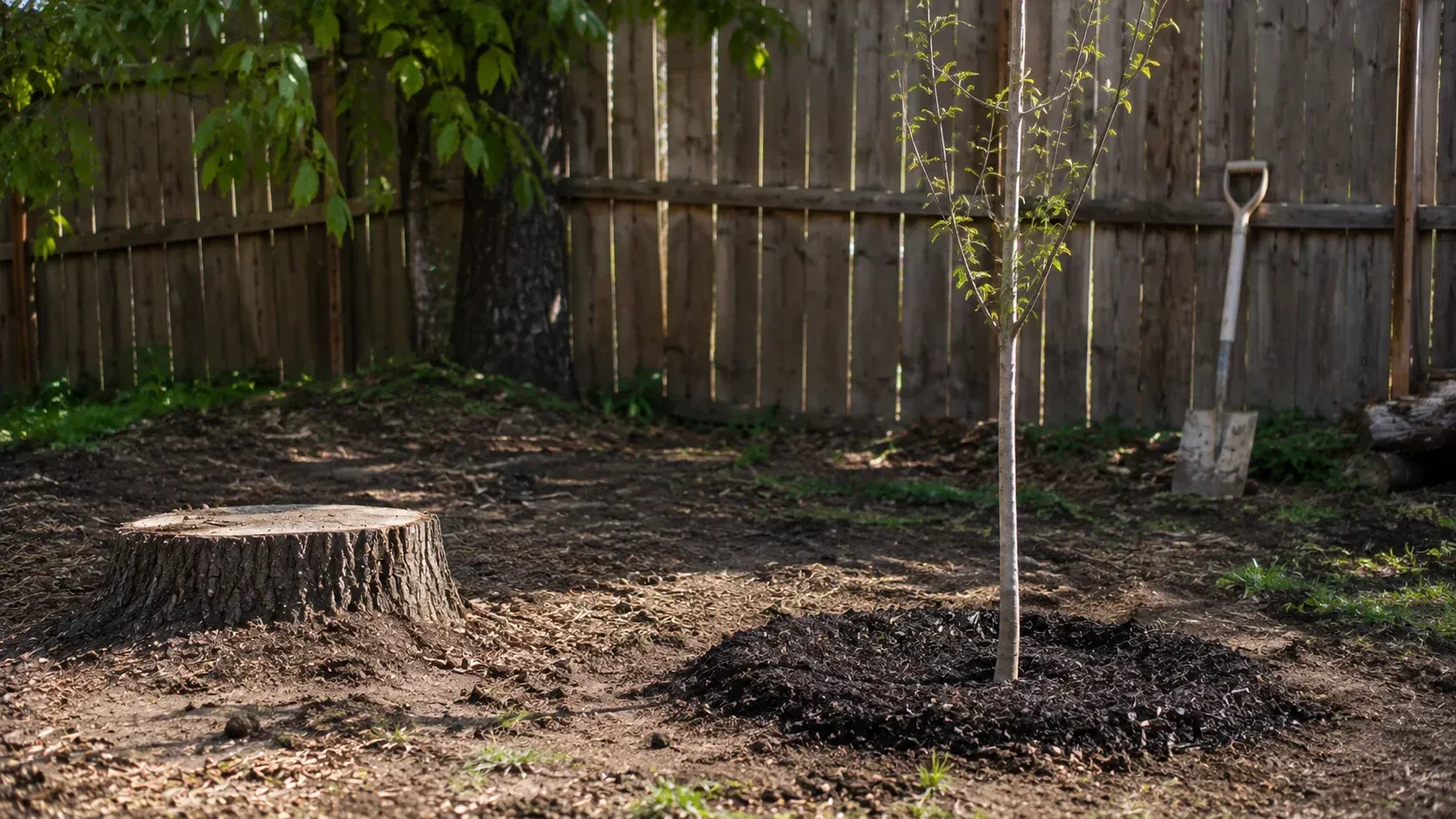
Once the tree is removed, you're left with a stump and often a pile of debris. Most professional tree removal services include debris cleanup and offer stump grinding as a follow-up service, since the stump remains a tripping hazard and eyesore even after the tree itself is gone.
When Trimming Is the Right Choice
Several situations clearly call for trimming rather than removal.
Isolated Dead or Damaged Branches
If a tree has one or several dead branches but the main trunk and canopy are healthy, trimming addresses the problem without sacrificing the entire tree. Dead branches should be removed regardless because they create safety hazards, but their presence alone doesn't mean removal is needed.
Overgrowth Affecting Structures or Visibility
Branches extending over roofs, blocking walkways, or interfering with power lines typically need trimming, not removal. The tree itself remains healthy; it just needs its growth managed to prevent property damage or access issues.
Improving Tree Health and Structure
Trees with crossing branches, excessive density, or minor structural issues benefit from trimming that improves airflow, light penetration, and overall structural integrity. This type of maintenance trimming supports long-term tree health.
Routine Seasonal Maintenance
Many healthy trees simply need periodic trimming every 2-3 years to maintain their shape, remove minor deadwood, and support continued healthy growth. This is preventive maintenance rather than a response to a specific problem.
When Removal Becomes Necessary
Other situations make removal the appropriate choice, even when trimming might seem like a less drastic option.
Severe Structural Damage or Disease
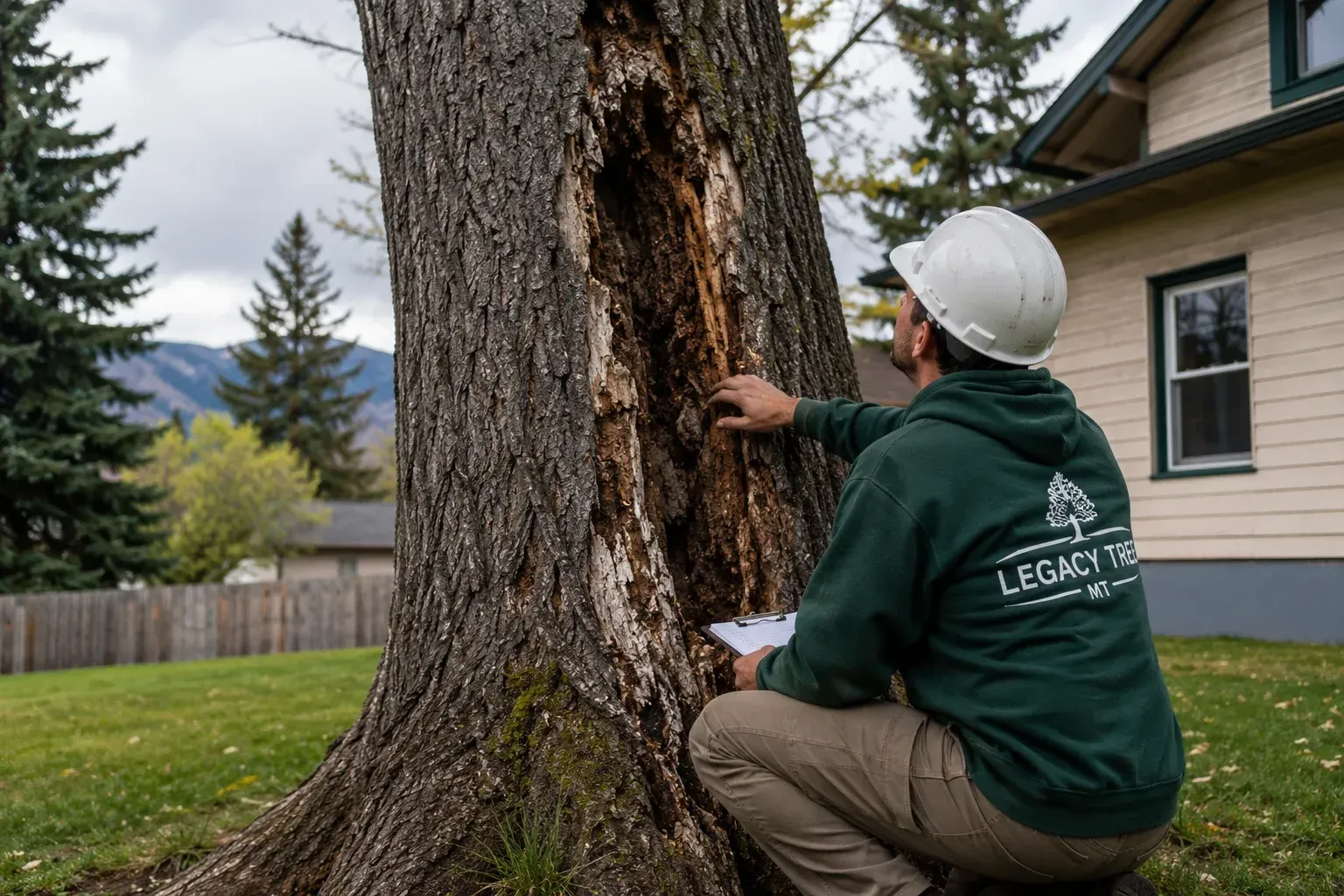
When a tree has extensive trunk decay, severe disease affecting the majority of the canopy, or structural damage that compromises its stability, trimming can't fix the underlying problem. The tree's structural integrity is compromised beyond what pruning can address.
Significant Lean or Root Damage
A tree that has developed a significant lean, especially after storms or soil erosion, often indicates root system damage that trimming cannot resolve. If roots are compromised, the tree remains a falling hazard regardless of how its branches are trimmed.
Hazard Proximity to Structures
If a declining or structurally compromised tree is positioned where falling could damage your home, garage, or other structures, removal becomes the safer choice rather than hoping trimming extends the tree's stability.
Persistent Pest or Disease Problems
Some pest infestations or diseases affect the entire tree system in ways that trimming cannot resolve. When treatment options have been exhausted and the tree's decline continues, removal prevents the problem from spreading to nearby healthy trees.
A Practical Decision Framework
Use this framework to think through which service your tree actually needs.
Step 1: Assess Overall Tree Health
Is the majority of the tree's canopy healthy and green, or is significant portions dead or declining? Healthy canopy with isolated problems suggests trimming. Widespread decline suggests removal.
Step 2: Examine the Trunk and Root Structure
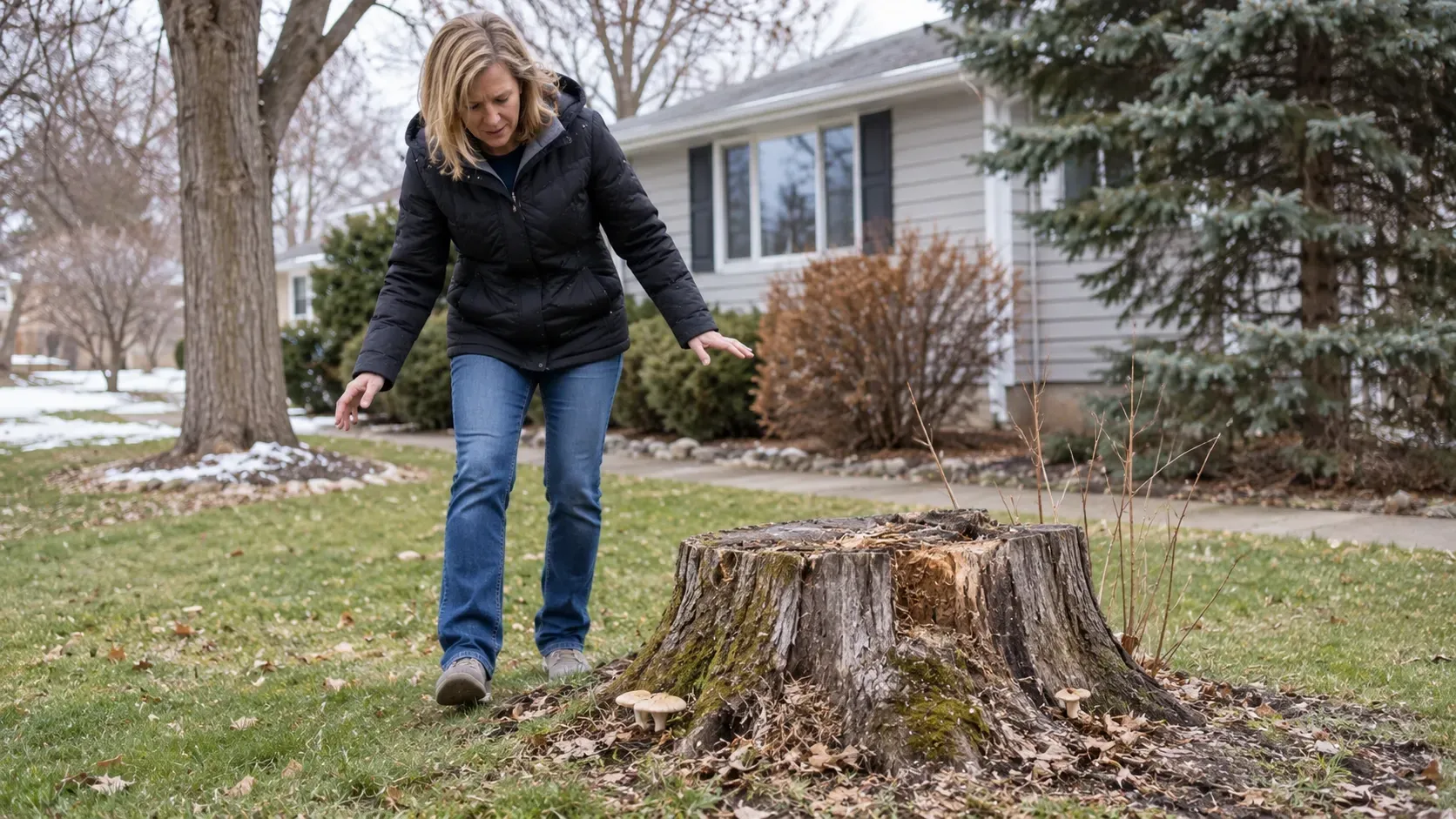
Look for large cavities, significant cracks, fungal growth at the base, or visible root damage. These signs typically point toward removal since trimming doesn't address structural compromise.
Step 3: Consider the Lean
A slight, natural lean that's always been there usually isn't concerning. A new or increasing lean, especially after a storm, suggests root damage and leans toward removal.
Step 4: Evaluate Proximity to Structures
If the tree is healthy but branches interfere with structures, trimming solves the problem. If the tree itself poses a falling risk to structures due to its condition, removal is the safer path.
Step 5: Get a Professional Assessment
If you're genuinely unsure, a professional evaluation clarifies which service applies. Some problems that look severe are actually manageable with trimming, while some that look minor indicate deeper issues requiring removal.
Common Misconceptions About Removal and Trimming
Several widespread beliefs about these services don't match reality.
Misconception 1: "If a tree looks bad, it needs to come down"
What's actually true: Appearance doesn't always indicate the tree's actual health or structural integrity. A tree can look sparse or unusual due to seasonal changes, past trimming, or minor issues while remaining structurally sound.
Why the distinction matters: Removing a tree unnecessarily based on appearance wastes money and eliminates a tree that could have been saved with proper trimming and care.
Misconception 2: "Heavy trimming is the same as a partial removal"
What's actually true: Trimming, even aggressive trimming, maintains the tree's core structure and root system. Removal eliminates the tree entirely. These aren't different degrees of the same service - they're fundamentally different outcomes.
Why the distinction matters: Homeowners sometimes request "heavy trimming" when what they actually want is removal, or vice versa. Clarifying your actual goal with a professional prevents miscommunication about the service you need.
Misconception 3: "Dead branches always mean the whole tree is dying"
What's actually true: Trees naturally shed branches as they grow and redirect energy. Isolated deadwood is common in otherwise healthy trees and doesn't indicate overall decline.
Why the distinction matters: Assuming dead branches mean the tree is dying leads to unnecessary removal decisions. Trimming the dead branches often resolves the issue completely.
Misconception 4: "Trimming is always cheaper, so try that first"
What's actually true: While trimming typically costs less per visit, if a tree genuinely needs removal, repeated trimming attempts don't solve the underlying problem and waste money over time without addressing the hazard.
Why the distinction matters: Choosing trimming for a tree that actually needs removal delays the inevitable while the hazard remains unaddressed, potentially leading to property damage or injury.
Real Scenarios - Trimming or Removal?
These scenarios illustrate how different tree conditions lead to different service decisions.
Scenario 1: Overgrown Maple Near the House
Situation: A mature maple tree has healthy growth but branches are extending over the roof and blocking a second-story window.
Assessment: Tree is healthy, problem is branch position, no structural concerns.
Decision: Trimming. Crown reduction and clearance pruning address the overgrowth while preserving the tree.
Outcome: Tree remains on the property, branches no longer contact the structure, tree continues to provide shade and value.
Scenario 2: Declining Ash With Trunk Damage
Situation: An ash tree shows significant canopy dieback, visible cavities at the base, and fungal growth on the trunk.
Assessment: Signs of advanced disease and structural compromise affecting the whole tree.
Decision: Removal. The structural damage and disease progression can't be resolved through trimming.
Outcome: Tree is removed and stump ground, eliminating the hazard. Property owner considers replanting in a different location.
Scenario 3: Storm-Damaged Pine With New Lean
Situation: A large pine developed a noticeable lean after a recent windstorm, with no other visible symptoms.
Assessment: Possible root damage from the storm, even though the canopy still looks mostly healthy.
Decision: Professional assessment recommended removal due to root system concerns, despite the canopy appearing fine.
Outcome: Tree removed as a precaution before root failure could cause it to fall unpredictably, protecting the nearby garage.
What Typical Online Advice Gets Wrong
Much generic online content oversimplifies the decision between trimming and removal.
What Online Sources Usually Say
"If your tree has dead branches or looks unhealthy, it's probably time for removal."
What's Missing
This oversimplifies a decision that actually depends on the extent and location of the problem, not just its presence. Online guides often don't distinguish between isolated issues that trimming resolves and systemic issues that require removal. They also rarely address how root and trunk conditions, which aren't always visible, factor into the decision.
Why This Matters
Following oversimplified advice leads some homeowners to remove perfectly saveable trees while others delay removal of genuinely hazardous trees because the online checklist didn't match their exact situation.
The Practical Reality
The trimming versus removal decision depends on a combination of canopy health, trunk condition, root stability, and proximity to structures. No single symptom determines the answer. Professional assessment accounts for all these factors together rather than relying on a simplified checklist.
Cost and Time Differences
Understanding the practical differences in cost and time helps set realistic expectations.
Trimming Costs and Time
Trimming is typically faster, often completed in a few hours depending on tree size and scope of work. Costs vary based on tree height, number of branches, and accessibility, but trimming is generally more affordable per visit than removal since less labor and equipment are required.
Removal Costs and Time
Removal takes longer because it involves felling or sectioning the entire tree, managing the debris, and typically includes stump grinding. Costs are higher due to increased labor, equipment needs, and the complexity of safely bringing down a large tree, especially near structures.
Long-Term Cost Considerations
While trimming costs less per visit, it's an ongoing expense every few years for healthy trees you want to maintain. Removal is a one-time cost but eliminates any future need for care on that particular tree. Weighing these costs against your long-term plans for the property helps clarify the better financial choice.
Conclusion
Tree trimming and tree removal serve fundamentally different purposes. Trimming maintains a healthy tree's structure, appearance, and safety while keeping it alive. Removal eliminates a tree entirely when its condition makes it a hazard or when disease and structural damage can't be resolved through pruning.
The right choice depends on the tree's overall health, trunk and root condition, lean, and proximity to structures, not just surface-level appearance. Isolated dead branches or overgrowth typically call for trimming. Severe disease, structural compromise, or significant lean typically call for removal.
Since visual symptoms don't always reveal the full picture, especially regarding root and trunk health, a professional assessment provides clarity when you're uncertain which service your tree actually needs.
Not Sure Which You Need? Let's Talk
Every tree situation is different, and the right decision depends on factors that aren't always obvious from the ground. If you're trying to figure out whether your tree needs trimming or removal, talking through the specific condition helps clarify the best path forward.
If you'd like an assessment of your tree's condition, you can contact us today to discuss what you're seeing and get guidance on whether trimming or removal makes sense for your situation. There's no pressure - just a conversation about what your tree actually needs.
You can also
reach out anytime if you have questions about either service or want to understand what each process involves for your specific property.
Frequently Asked Questions
1. Can a tree that needs trimming eventually need removal later?
Yes. Trees change over time due to age, disease, storm damage, or environmental stress. A tree that only needed trimming a few years ago might develop structural issues later that require removal. Regular assessment helps catch these changes early.
2. Is it possible to save a tree that looks severely overgrown through trimming alone?
Often, yes. Severe overgrowth itself doesn't necessarily indicate poor health - it indicates the tree hasn't been maintained. Proper trimming over one or more sessions can restore structure and health to an overgrown but otherwise viable tree.
3. How do I know if a leaning tree needs removal or if the lean is normal?
A lean that has existed for years without changing is often natural and not concerning. A new lean, especially following a storm or heavy rain, suggests root damage and warrants professional assessment, since this type of lean often indicates removal is necessary.
4. Does trimming a tree incorrectly ever lead to it needing removal sooner?
Yes. Improper cuts can introduce disease, create structural weaknesses, or stress the tree in ways that shorten its lifespan. This is one reason proper trimming technique matters significantly for a tree's long-term health and stability.
5. If only part of a tree is affected by disease, can removal of that section save the rest?
Sometimes. If disease is isolated to specific branches, trimming those sections can prevent spread and save the tree. If disease has spread to the trunk or main structural branches, removal of the affected sections may not be enough, and whole-tree removal becomes necessary.