Should You Trim Trees Yourself or Hire a Professional Arborist?
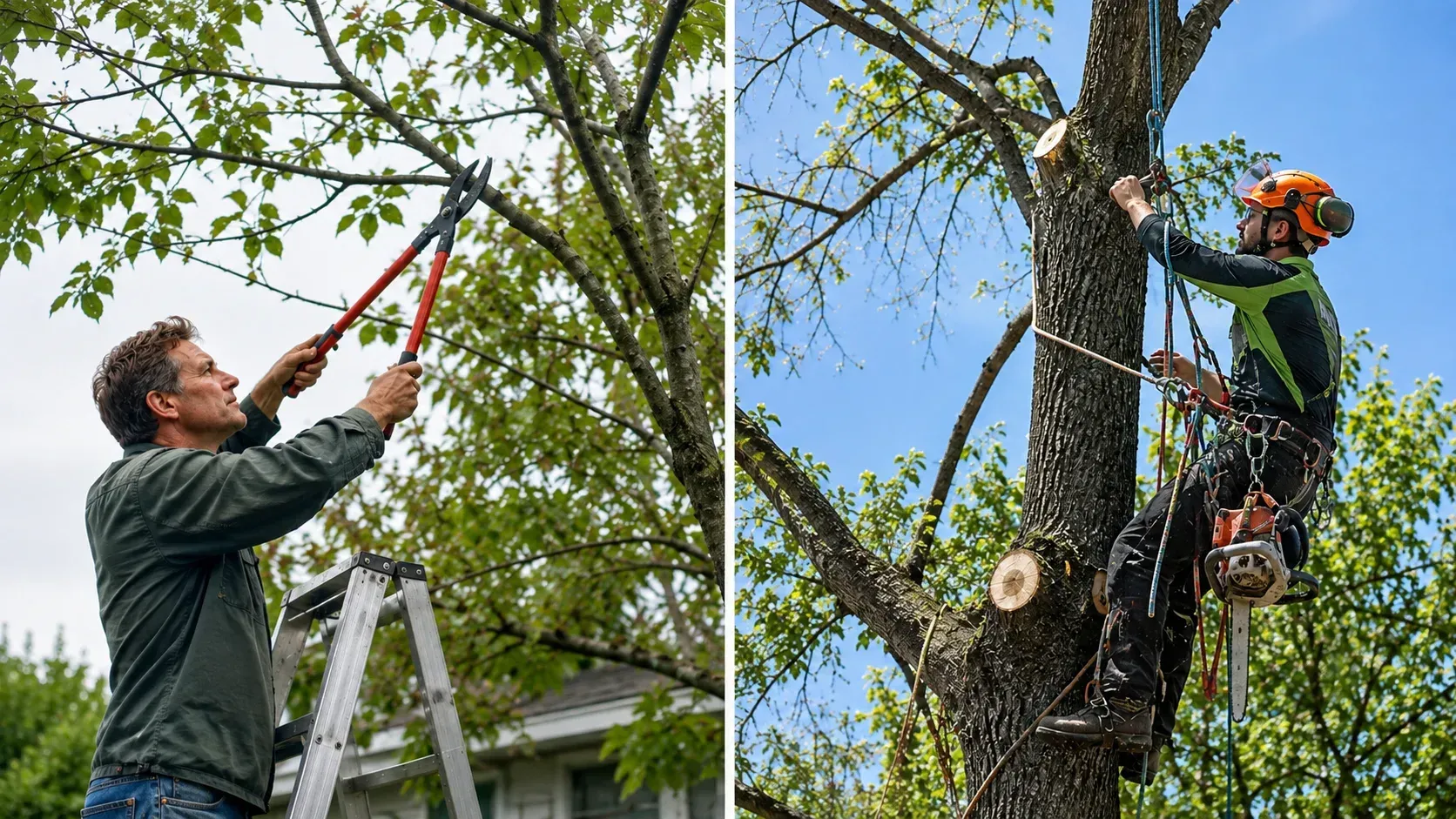
Table of Contents
- Introduction
- When DIY Tree Trimming Is Actually Reasonable
- When Professional Tree Trimming Is Necessary
- Safety Risks Most DIYers Underestimate
- Equipment and Tools - What You Actually Need
- Cost Analysis - DIY Versus Professional Services
- Long-Term Tree Health Considerations
- Conclusion
- Making Your Decision - Let's Talk Through It
- Frequently Asked Questions
Key Takeaways
- DIY tree trimming makes sense for small, low branches on young, healthy trees, but becomes increasingly risky with height, diameter, dead wood, and proximity to structures or power lines
- Professional arborists have liability insurance, specialized equipment, and training in proper pruning techniques that prevent tree damage and injury - factors DIY work lacks
- The actual cost difference between DIY and professional services is often smaller than expected when you factor in equipment investment, travel time, and risk of mistakes
- Most serious tree trimming injuries happen to homeowners attempting work above shoulder height or working with dead, brittle wood that breaks unpredictably
- The decision between DIY and professional trimming should depend on tree size, your physical ability, proximity to hazards, and whether the tree's long-term health matters to you
Introduction
Whether you should trim trees yourself or hire a professional depends primarily on tree height, branch diameter, your physical ability, proximity to structures or power lines, and whether proper technique matters to the tree's long-term health. Small pruning jobs on young trees at ground level are manageable for most homeowners. Large trees, dead branches, work requiring ladders, or branches over structures require professional expertise and equipment.
For Hamilton homeowners considering tree trimming, the choice often feels like it comes down to cost, but the real factors are safety, proper technique, and whether the work will actually improve or damage your tree. Some DIY projects make perfect sense. Others are genuinely dangerous and likely to harm your trees or yourself.
This guide helps you understand what work you can reasonably do yourself and when professional tree trimming is worth the investment. The difference between a good trim and a damaging one is often technique, not just effort. Understanding your own limitations and when to call for help is the smartest approach to tree maintenance.
When DIY Tree Trimming Is Actually Reasonable
Some tree trimming projects are genuinely manageable for homeowners without professional expertise or equipment.
Ground-Level Work on Small Trees
Trimming low branches on young trees - work you can do from the ground without a ladder - is where DIY makes sense. If the branches are within arm's reach and you're cutting wood smaller than a pencil in diameter, the work is low-risk. Young trees typically have softer wood that cuts cleanly. The tree responds well to pruning at this scale. You're not working at height or with heavy branches.
Deadwood Removal at Ground Level
Removing clearly dead branches that you can safely reach is reasonable. Dead wood stands out - it's gray, brittle, and has no green growth. If you can safely access dead branches at ground level and they're small enough to handle, removal won't harm the tree. Dead wood is a legitimate hazard and safety concern, so even small DIY removal helps.
Cleaning Up After Storm Damage
After a storm, small broken branches might be hanging from lower sections of trees. If you can safely access these branches from the ground and they're small enough to handle, removing them is practical. The branch is already damaged anyway. Cleanup prevents further damage as broken limbs continue to degrade.
Seasonal Maintenance on Established Trees
If you have young, healthy trees you've been maintaining for years and you know their structure well, seasonal maintenance trimming - removing small crossing branches, light thinning - can be done as long as work stays at ground level and branches are small enough to cut with hand pruners or a small saw.
The Reality of DIY Limitations
These scenarios work because they avoid the factors that make tree trimming dangerous or complicated: height, heavy branches, dead wood that breaks unpredictably, proximity to structures, and work that affects the tree's overall form. Stay within these boundaries and DIY is reasonable. Step outside them and risk increases dramatically.
When Professional Tree Trimming Is Necessary
Several situations require professional expertise, equipment, and insurance.
Trees Taller Than 20-25 Feet
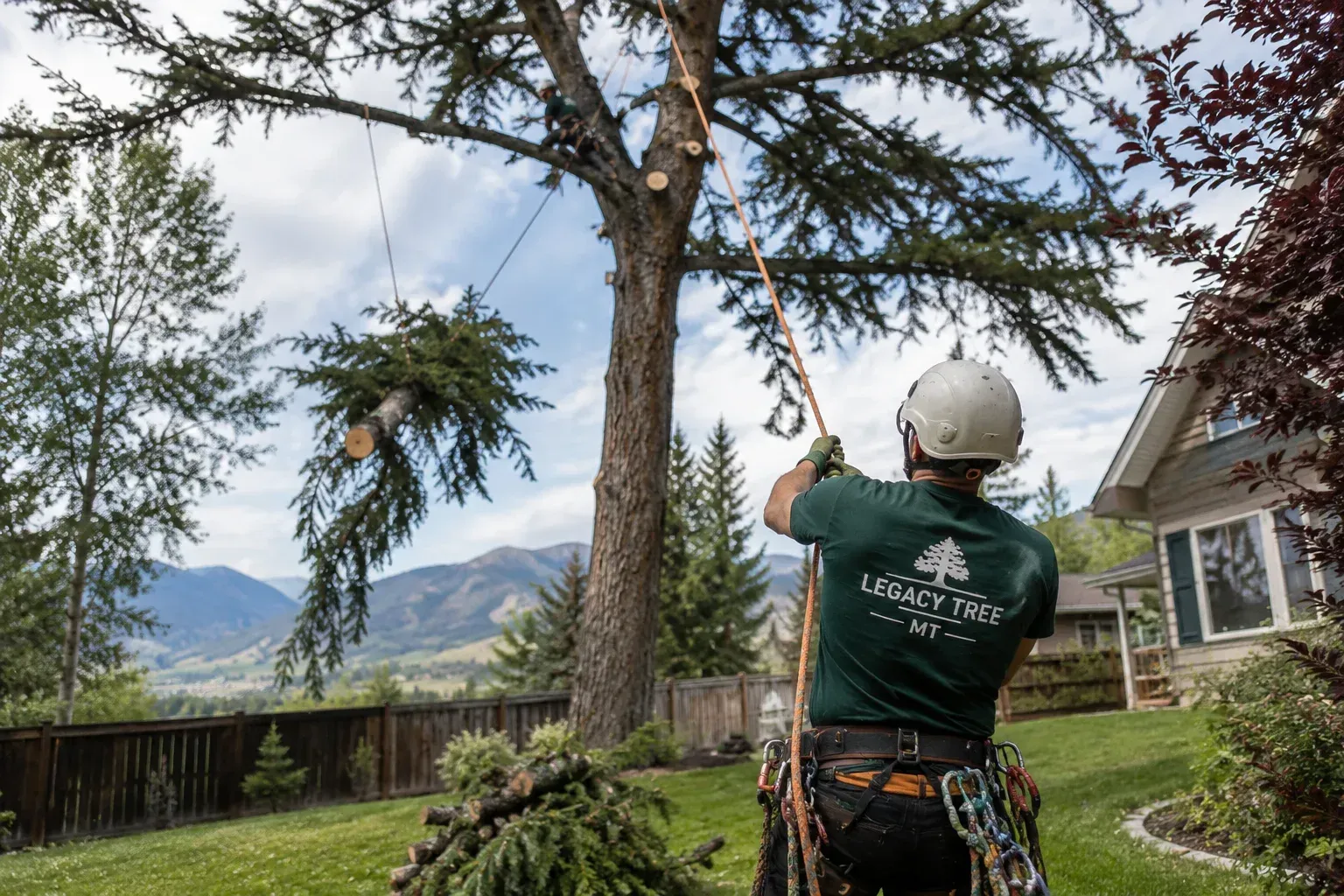
Once trees reach significant height, trimming requires climbing, ropes, harnesses, and training to work safely from elevation. A 25-foot tree might need a 20-foot ladder at best - and working from a ladder while cutting branches is inherently unstable. Professional arborists use climbing techniques and safety equipment that homeowners don't have. The liability and risk are too high for DIY.
Branches Over Structures
Branches hanging over your house, garage, shed, or power lines require precise cuts and careful branch management to prevent damage. If a branch drops on your roof or power line, the consequences are significant. Professionals know how to control branch drop and prevent accidents. DIY mistakes here are costly.
Dead or Diseased Wood
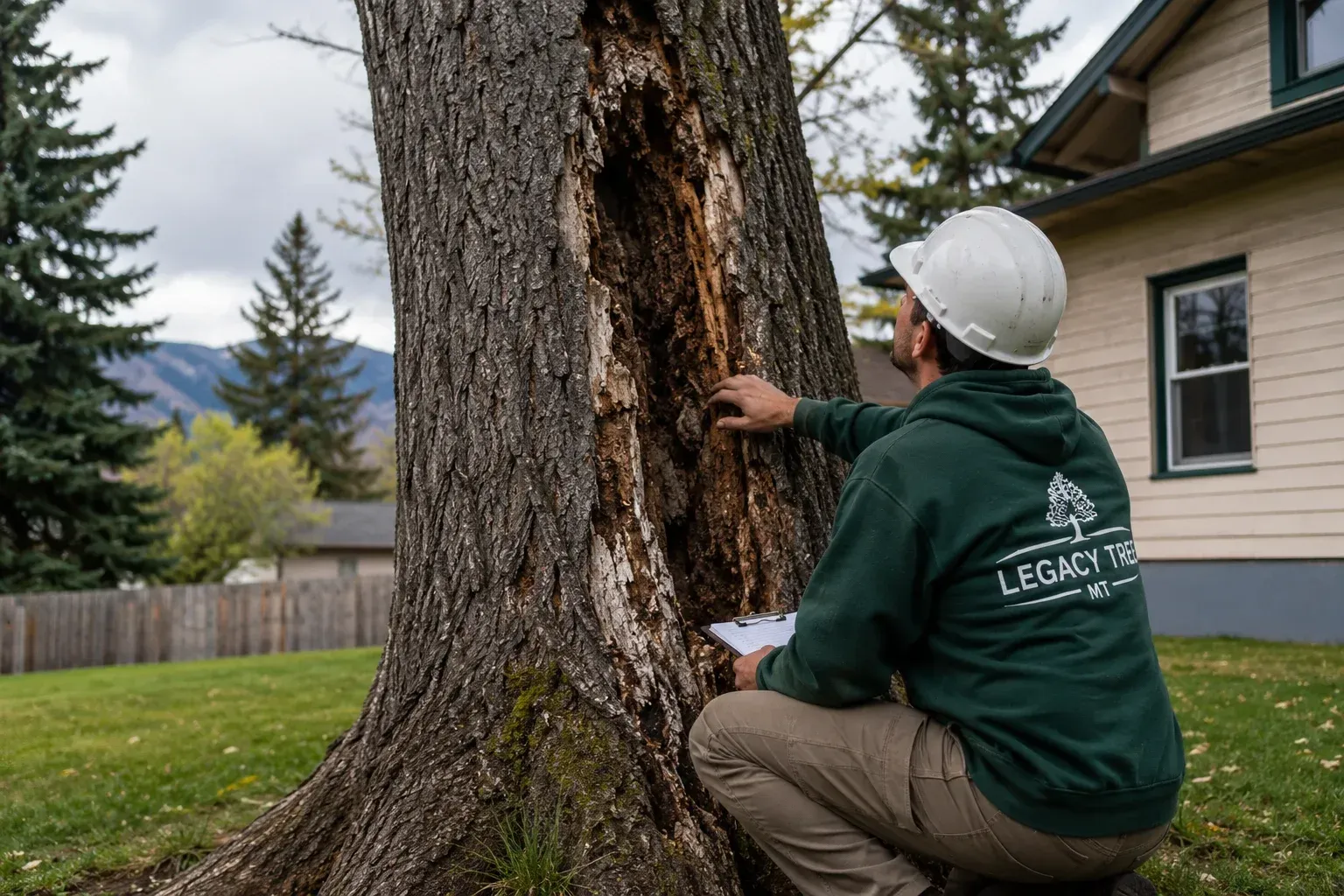
Dead branches are brittle and unpredictable. A dead branch that looks like it can be hand-pruned might snap differently than expected when you touch it. Large dead wood especially is hazardous. Diseased wood requires knowledge to identify what's actually diseased and what's normal. Improper removal can spread disease to healthy parts of the tree. Professional assessment is valuable here.
Trees Close to Structures or Power Lines
If a tree is growing within 10 feet of your house, attached structures, or power lines, trimming mistakes are expensive. Branches dropped on your roof, through a window, or onto power lines create liability. Professionals carry insurance. They have experience working in these constrained situations. The risk isn't worth DIY savings.
Trees You Plan to Keep Long-Term
If you intend to keep the tree for decades and want it to be healthy and structurally sound, professional pruning matters. Improper cuts lead to poor regrowth, disease entry, and weak branch structure that creates future hazards. A professional trim costs more upfront but preserves the tree's long-term health and reduces future issues.
Trees with Large-Diameter Branches
Once branches reach 2-3 inches in diameter, cutting becomes different. The branch is heavy. It doesn't cut clean with handheld tools. Removal requires controlled techniques and often climbing. This work is definitively professional territory.
Safety Risks Most DIYers Underestimate
Several safety considerations are often overlooked when homeowners consider DIY trimming.
Fall Risk From Height
Ladders used for tree trimming are inherently unstable. You're reaching up at angles, cutting with one hand, holding the ladder with the other. Balance is compromised. Footing can slip. Branch saws catch or bind unexpectedly. Professional arborists use climbing ropes and harnesses that distribute weight and provide safety systems. A homeowner on a ladder has no backup safety system. Falls from even 10-15 feet cause serious injury or death.
Unpredictable Branch Drop
Dead branches especially don't fall the way you expect. A branch you think you're gently lowering suddenly snaps or drops with momentum you didn't anticipate. The branch lands on your leg, foot, or head. Branches can weigh 50-100+ pounds when fully loaded with wood and moisture. That weight dropping from height is dangerous. Professional arborists manage branch drop with ropes and controlled techniques.
Chainsaw Kickback and Loss of Control
Chainsaws are powerful tools that require training to operate safely. Kickback - where the blade catches and the saw suddenly jumps toward the operator - causes serious cuts and lacerations. Working at height with a chainsaw magnifies the risk. You're balancing on a ladder and operating a dangerous tool simultaneously. Professional tree services have chainsaw training and safety protocols. Most homeowners don't.
Hidden Power Lines
Branches might touch power lines without your realizing it. Trimming a branch that contacts power lines electrocutes you. You might not see the line through foliage. Professional contractors clear power line conflicts before work begins. Homeowners often don't recognize the hazard until it's too late.
Physical Demands
Trimming work is physically demanding - reaching, cutting, handling branches, repositioning. If you're not in good physical condition or have balance problems, the physical demands plus height increase injury risk substantially. Age and fitness matter more than most people recognize.
Equipment and Tools - What You Actually Need
One factor DIYers often overlook is the cost and specificity of proper equipment.
For Small Ground-Level Work
Hand pruners, a pruning saw, and basic tools are sufficient. You probably have these already or can get them for $50-150 total. This covers basic maintenance trimming on accessible, small branches.
For Larger DIY Projects
Once you step beyond ground-level work, equipment needs expand. A step ladder (safe up to about 10 feet), power tools like a reciprocating saw or pole saw, safety glasses, work gloves, and a dust mask become necessary. This adds $300-800 depending on whether you already own tools.
For Any Work Above Shoulder Height
Extension ladders, rope and pulley systems for controlling branch drop, additional safety equipment, and climbing harnesses become necessary. You're entering professional-grade equipment territory. A basic climbing harness system runs $200-500. A quality extension ladder is $200-400. You're now at professional equipment investment levels.
Professional Equipment Investment
Professional arborists invest $5,000-25,000+ in specialized equipment including climbing ropes, harnesses, rigging pulleys, chainsaws, chippers, and safety gear. They maintain and replace this equipment regularly. The equipment investment alone demonstrates why professional services cost what they do - you're paying for access to specialized tools you don't own.
The Reality of Equipment
Most homeowners don't own professional-grade equipment. Renting equipment for a one-time job costs nearly as much as hiring a professional. If you only trim trees once every few years, equipment investment doesn't make financial sense.
Cost Analysis - DIY Versus Professional Services
The price difference between DIY and professional trimming looks large until you factor in hidden costs.
DIY Costs
Equipment purchase (if you don't have it): $50-800 depending on scope. Your time: typically 4-8 hours for moderate work. Equipment maintenance and storage between uses. Risk of injury leading to medical costs. Risk of tree damage requiring corrective trimming or removal later. Risk of property damage if branches drop incorrectly.
Professional Trimming Costs
A professional trim of moderate complexity typically runs $200-800 depending on tree size and difficulty. This includes all equipment, insurance, expertise, and cleanup. When you explore our complete tree services, you'll see the range of options available and what's included in professional pricing for different tree situations.
Hidden DIY Costs
If you make improper cuts, the tree might develop disease or structural weakness that becomes expensive to fix later. A $500 DIY trim that damages the tree's form might cost $1,500-2,000 to correct in a few years. If you injure yourself, medical costs and time off work dwarf any savings. If a branch drops and damages your roof or power line, costs run thousands of dollars.
The Realistic Comparison
DIY ground-level maintenance trimming on small trees: $0-200 in materials, worth doing yourself if you have time and ability.
Professional trimming of larger trees or complex work: $300-1,000, genuinely worth the cost when you factor in safety, proper technique, and tree health.
DIY trimming requiring ladder work or chainsaws: Often equals or exceeds professional cost once you factor in equipment, time, and risk of mistakes.
Long-Term Tree Health Considerations
One factor often overlooked is how trimming choices today affect tree health for years to come.
Improper Cuts Create Lasting Damage
A cut made incorrectly doesn't heal normally. The tree develops a weak spot where disease enters. Structural problems from improper pruning appear years later when the tree becomes a hazard or dies. You might not see the consequence of the bad trim until the tree is damaged beyond recovery.
Professional Cuts Support Longevity
A professional trim following proper technique supports the tree's health. Branches heal cleanly. Structure is improved. The tree responds well. The benefits compound over years as the tree continues to develop from a solid structural foundation. Our approach to tree trimming and maintenance focuses on these long-term health considerations to ensure your trees thrive for decades.
One Bad Trim Can Require Multiple Corrections
If you prune incorrectly and damage the tree's form or structure, fixing it requires multiple years of corrective pruning - and professional work. What seemed like a money-saving DIY project ends up costing more to correct than hiring a professional would have cost initially.
Conclusion
The decision between DIY and professional tree trimming should depend on tree size, branch diameter, your physical ability, proximity to hazards, and whether the tree's long-term health matters. DIY ground-level maintenance on small trees is reasonable. Work requiring ladders, heavy branches, dead wood, or proximity to structures is professional territory.
The cost difference between DIY and professional work is smaller than it appears once you factor in equipment, your time, and the risk of mistakes. For work above shoulder height or on large trees, professional services are genuinely worth the investment.
Safety should be your primary concern. Most serious tree trimming injuries happen to homeowners attempting work they don't have training or equipment for. Professional arborists have insurance, proper equipment, and years of experience managing exactly these risks.
Your tree's long-term health should factor into your decision too. A professional trim that costs more upfront supports the tree's health and structure for decades. A DIY trim that seems to save money might damage the tree in ways that become expensive to fix later.
Making Your Decision - Let's Talk Through It
The best decision depends on your specific trees, property, and situation. What works for your neighbor might not be right for your situation. What you can safely handle yourself might be different from what someone else can manage.
If you're unsure whether DIY makes sense for your trees, talking through your specific situation helps clarify the right choice. You can discuss your trees, your property, your comfort level with heights and tools, and what you're trying to accomplish.
There's no one-size-fits-all answer. Your specific trees and property determine what approach makes sense. If you'd like to discuss whether DIY is reasonable for your situation or whether professional tree trimming makes sense, you can
contact us today. It's just a conversation about your trees and what they need. You can also
reach out anytime if you'd like to discuss your specific situation with our team.
Frequently Asked Questions
What size branches are safe to cut myself, and what requires a professional?
Branches smaller than your thumb in diameter and within arm's reach from the ground are safe DIY territory. Branches thicker than your wrist or work requiring a ladder should go to a professional. The larger the branch, the more technique and equipment matter. When in doubt, err toward professional help.
Is it ever okay to use a chainsaw as a homeowner for tree trimming?
Handheld chainsaws require training and proper safety equipment. If you own a chainsaw and have training, small ground-level work might be okay. Any work above shoulder height with a chainsaw should be done by a professional. Chainsaws and ladder work together are genuinely dangerous - don't attempt that combination.
Can I damage my tree permanently by trimming it wrong?
Yes. Improper cuts can damage the tree's structure, create disease entry points, and lead to weak regrowth. Some trees recover slowly from bad pruning. Others develop permanent structural problems. One bad trim might not kill a tree immediately, but it can compromise its health and longevity. This is why proper technique matters
If I hire a professional, how do I know they're actually competent and not just trying to upsell me?
Ask if they're certified arborists. Request references from previous work. Ask them to explain what they'll trim and why - competent professionals can articulate their reasoning. Check reviews and ask neighbors about their experiences. A professional who takes time to explain the work and answer questions is usually a good sign
What's the actual cost difference between DIY and professional tree trimming if I factor in equipment costs?
For a one-time project on a moderate tree, DIY equipment costs run $200-800 plus your time. Professional work runs $300-1,000. If you already own basic tools, DIY might save $200-500. If you need to rent or buy equipment, professional work often costs the same or less once you factor in time and rental costs.